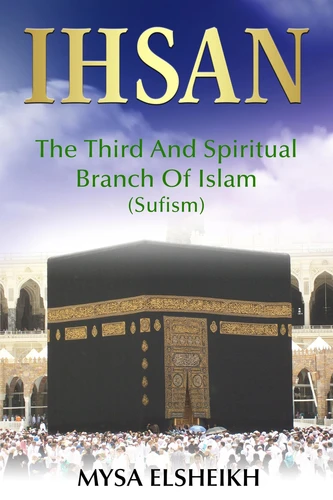
The branch of Ihsan, known commonly as Sufism, is the third branch described by the Prophet Muhammed (pbuh) in the Hadith of Gabriel that outlines the religion of Islam. The book acts as a comprehensive guide to the branch, explaining in detail how it is best practiced. It acts as a doctrine on the branch providing evidence to its principles from the Quran and Hadith. It should be an essential companion for all students of Ihsan (Sufism), and a good introduction to the branch's practices.
It is written in simple language to make even the most advanced teachings clear and in a way that is informative to Muslims, and introduces the religion to non-Muslims. Ihsan explains the principles of Sufism, such as the fact that the human ego has the power to command sin and evil, and that giving in to the desires of the ego is a state of disbelief as God says in the Quran "those who take their desires as gods", meaning following them in authority as if they were divine.
Also, the ego prevents us from seeing God, who the Quran says is closer to us than our jugular veins. That the love of God and the love of the Prophet Muhammed (pbuh) are a sign of sincerity in worship and perfection of belief and manifests by way of seeking seeing God and His messenger in a vision. The ego is annihilated by fighting the ego, and it's a struggle that requires a Sufi scholar so that the ego command is no longer from the self but is from the scholar, thereby defeating the ego.
The journey to God requires purifying of the spirit by increasing mention of God, so that the mention of God becomes a fuel to move closer to the presence of God. That after the death of the ego, and purification of the spirit, and constant prayer for vision of God as was the state of Prophet Muhammed (pbuh), God can accept the person into His presence and lift the veil for them to see the light of the face of God, even in this world.
After vision of God, then the Muslim can worship God as if they see Him, which is the definition of Ihsan as was defined by Prophet Muhammed (pbuh) in the Hadith of Gabriel.
The branch of Ihsan, known commonly as Sufism, is the third branch described by the Prophet Muhammed (pbuh) in the Hadith of Gabriel that outlines the religion of Islam. The book acts as a comprehensive guide to the branch, explaining in detail how it is best practiced. It acts as a doctrine on the branch providing evidence to its principles from the Quran and Hadith. It should be an essential companion for all students of Ihsan (Sufism), and a good introduction to the branch's practices.
It is written in simple language to make even the most advanced teachings clear and in a way that is informative to Muslims, and introduces the religion to non-Muslims. Ihsan explains the principles of Sufism, such as the fact that the human ego has the power to command sin and evil, and that giving in to the desires of the ego is a state of disbelief as God says in the Quran "those who take their desires as gods", meaning following them in authority as if they were divine.
Also, the ego prevents us from seeing God, who the Quran says is closer to us than our jugular veins. That the love of God and the love of the Prophet Muhammed (pbuh) are a sign of sincerity in worship and perfection of belief and manifests by way of seeking seeing God and His messenger in a vision. The ego is annihilated by fighting the ego, and it's a struggle that requires a Sufi scholar so that the ego command is no longer from the self but is from the scholar, thereby defeating the ego.
The journey to God requires purifying of the spirit by increasing mention of God, so that the mention of God becomes a fuel to move closer to the presence of God. That after the death of the ego, and purification of the spirit, and constant prayer for vision of God as was the state of Prophet Muhammed (pbuh), God can accept the person into His presence and lift the veil for them to see the light of the face of God, even in this world.
After vision of God, then the Muslim can worship God as if they see Him, which is the definition of Ihsan as was defined by Prophet Muhammed (pbuh) in the Hadith of Gabriel.


 , qui est-ce ?