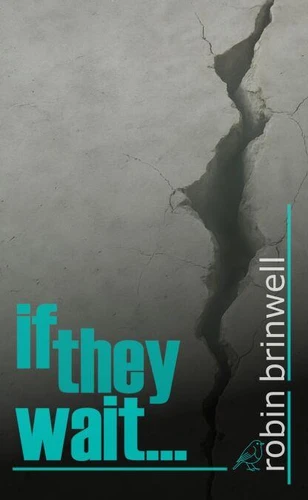
East London, 1992. Newly alone and nearly broke, freelance illustrator Martin Hale rents a flat he can barely afford. Beneath the flat is a basement: the studio space he needs for work. And he has to find work, before the last of his money runs out. The basement is not what he expected. Not what he promised himself. It's dark. It's filthy. In the concrete floor there's a crack, a foul smelling hole.
Sometimes the hole leaks. Martin tells himself it's drains, it's damp, it's vermin - some ordinary thing. He covers it. He cleans around it. He tries to live above it, hoping it'll just leave him alone. But whatever is down there, it isn't going away. It shifts. It retreats. But then it creeps back, different, and worse. If They Wait is a quiet, claustrophobic horror novella, rooted in a corner of early 90s East London.
It unfolds slowly, through routine, repetition, and rationalisation, with a focus on bodily disgust, contamination, and the way pressure accumulates when leaving isn't simple. There are no neat explanations and no clever fixes - just the damage done when "managing it" becomes your whole life. The horror isn't what's in the hole. It's how you live with it.
East London, 1992. Newly alone and nearly broke, freelance illustrator Martin Hale rents a flat he can barely afford. Beneath the flat is a basement: the studio space he needs for work. And he has to find work, before the last of his money runs out. The basement is not what he expected. Not what he promised himself. It's dark. It's filthy. In the concrete floor there's a crack, a foul smelling hole.
Sometimes the hole leaks. Martin tells himself it's drains, it's damp, it's vermin - some ordinary thing. He covers it. He cleans around it. He tries to live above it, hoping it'll just leave him alone. But whatever is down there, it isn't going away. It shifts. It retreats. But then it creeps back, different, and worse. If They Wait is a quiet, claustrophobic horror novella, rooted in a corner of early 90s East London.
It unfolds slowly, through routine, repetition, and rationalisation, with a focus on bodily disgust, contamination, and the way pressure accumulates when leaving isn't simple. There are no neat explanations and no clever fixes - just the damage done when "managing it" becomes your whole life. The horror isn't what's in the hole. It's how you live with it.

 , qui est-ce ?
