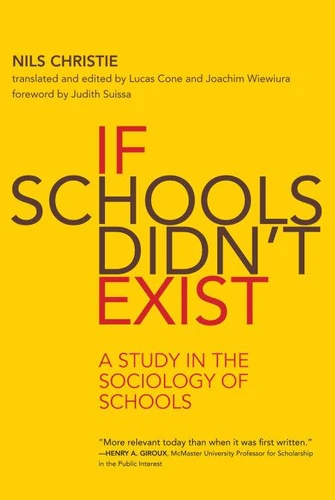
A classic in the philosophy of education, considering the fundamental purpose and function of schools, translated into English for the first time. This classic 1971 work on the fundamental purpose and function of schools belongs on the same shelf as other landmark works of the era, including Ivan Illich's Deschooling Society, Paulo Freire's Pedagogy of the Oppressed, and John Holt's How Children Fail.
Nils Christie's If School Didn't Exist, translated into English for the first time, departs from these works by not considering schooling (and deschooling) as much as schools and their specific community and social contexts. Christie argues that schools should be proving grounds for how to live together in society rather than assembly lines producing future citizens and employees.
A classic in the philosophy of education, considering the fundamental purpose and function of schools, translated into English for the first time. This classic 1971 work on the fundamental purpose and function of schools belongs on the same shelf as other landmark works of the era, including Ivan Illich's Deschooling Society, Paulo Freire's Pedagogy of the Oppressed, and John Holt's How Children Fail.
Nils Christie's If School Didn't Exist, translated into English for the first time, departs from these works by not considering schooling (and deschooling) as much as schools and their specific community and social contexts. Christie argues that schools should be proving grounds for how to live together in society rather than assembly lines producing future citizens and employees.


 , qui est-ce ?