OFFRE LISEUSES
Une liseuse achetée = une housse offerte* jusqu'au 21 juin

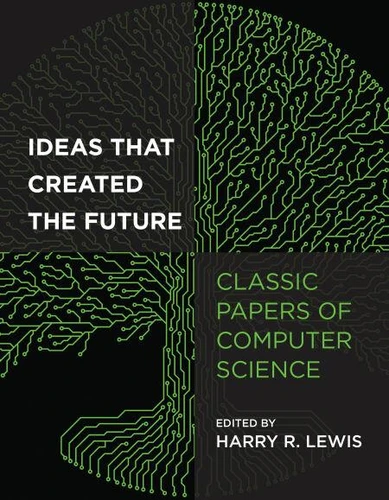
Ideas That Created the Future. Classic Papers of Computer Science
Par :Formats :
Disponible dans votre compte client Decitre ou Furet du Nord dès validation de votre commande. Le format ePub protégé est :
- Compatible avec une lecture sur My Vivlio (smartphone, tablette, ordinateur)
- Compatible avec une lecture sur liseuses Vivlio
- Pour les liseuses autres que Vivlio, vous devez utiliser le logiciel Adobe Digital Edition. Non compatible avec la lecture sur les liseuses Kindle, Remarkable et Sony
- Non compatible avec un achat hors France métropolitaine
 , qui est-ce ?
Notre partenaire de plateforme de lecture numérique où vous retrouverez l'ensemble de vos ebooks gratuitement
Pour en savoir plus sur nos ebooks, consultez notre aide en ligne ici
C'est si simple ! Lisez votre ebook avec l'app Vivlio sur votre tablette, mobile ou ordinateur :

- Nombre de pages520
- FormatePub
- ISBN978-0-262-36221-4
- EAN9780262362214
- Date de parution02/02/2021
- Protection num.Adobe DRM
- Taille17 Mo
- Infos supplémentairesepub
- ÉditeurThe MIT Press
Résumé
Classic papers by thinkers ranging from from Aristotle and Leibniz to Norbert Wiener and Gordon Moore that chart the evolution of computer science. Ideas That Created the Future collects forty-six classic papers in computer science that map the evolution of the field. It covers all aspects of computer science: theory and practice, architectures and algorithms, and logic and software systems, with an emphasis on the period of 1936-1980 but also including important early work.
Offering papers by thinkers ranging from Aristotle and Leibniz to Alan Turing and Nobert Wiener, the book documents the discoveries and inventions that created today's digital world. Each paper is accompanied by a brief essay by Harry Lewis, the volume's editor, offering historical and intellectual context.
Offering papers by thinkers ranging from Aristotle and Leibniz to Alan Turing and Nobert Wiener, the book documents the discoveries and inventions that created today's digital world. Each paper is accompanied by a brief essay by Harry Lewis, the volume's editor, offering historical and intellectual context.