SOLDES
Jusqu'à -70% sur une sélection d'articles*

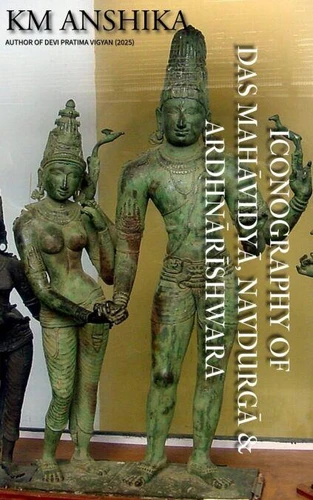
Iconography of Das Mahāvidyā, Navdurgā & Ardhnārīshwara. Concept of Dharma Series By PRASHARAN SVM Publishing Group
Par :Formats :
Disponible dans votre compte client Decitre ou Furet du Nord dès validation de votre commande. Le format ePub protégé est :
- Compatible avec une lecture sur My Vivlio (smartphone, tablette, ordinateur)
- Compatible avec une lecture sur liseuses Vivlio
- Pour les liseuses autres que Vivlio, vous devez utiliser le logiciel Adobe Digital Edition. Non compatible avec la lecture sur les liseuses Kindle, Remarkable et Sony
- Non compatible avec un achat hors France métropolitaine
 , qui est-ce ?
Notre partenaire de plateforme de lecture numérique où vous retrouverez l'ensemble de vos ebooks gratuitement
Pour en savoir plus sur nos ebooks, consultez notre aide en ligne ici
C'est si simple ! Lisez votre ebook avec l'app Vivlio sur votre tablette, mobile ou ordinateur :

- FormatePub
- ISBN8233130359
- EAN9798233130359
- Date de parution15/02/2026
- Protection num.Adobe DRM
- Infos supplémentairesepub
- ÉditeurLinda Balsamo
Résumé
The present volume, Iconography of Das Mahavidya, Navdurga & Ardhnarishwara, represents both a continuation of scholarly tradition and a fresh exploration of one of Hinduism's most revered and multifaceted deities. This work is the inaugural offering in the Concept of Dharma Series published by PRASHARAN SVM Publishing Group, undertaken with the aim of making profound aspects of Indian religious iconography accessible to students, researchers, and devotees alike.
My journey into the rich iconographic traditions surrounding Parvati began not merely as an academic pursuit, but as a deeply personal engagement with the divine feminine in Hindu theology. Following the publication of my previous work, Devi Pratima Vigyan (2024), I felt compelled to delve deeper into the specific manifestations of Shakti as embodied in Parvati and her myriad forms. This book examines the goddess from her earliest appearance as the daughter of the Himalayas through her transformative tapasya, her sacred union with Shiva, and her powerful manifestations as the Das Mahavidya, Navdurga, and the composite Ardhanarishvara form.
The structure of this book follows a systematic progression, beginning with the Prastavana that establishes the theological and cultural context of Parvati worship. The second chapter explores her early life, her divine birth, the significance of her various names, and the symbolism of her weapons. The third chapter examines the transformative power of her tapasya and the cosmic significance of her marriage to Shiva, an event that represents the union of consciousness and energy, purusha and prakriti.
The fourth chapter forms the heart of this study, analyzing the diverse iconographic forms of the goddess, from the esoteric Das Mahavidya to the warrior aspects of Navdurga, the androgynous beauty of Ardhanarishvara, and her role as the supreme destroyer of demonic forces. The concluding chapter synthesizes these themes while pointing toward continuing relevance of Parvati's iconography in contemporary Hindu practice.
My academic training in archaeology, including practical experience with the Uttar Pradesh State Archaeology Department, has equipped me with the methodological tools to analyze material culture and visual representations with scholarly rigor. Throughout my education, I have maintained a first division academic record, reflecting my commitment to excellence in research and interpretation. However, this book aspires to transcend purely academic boundaries.
It seeks to bridge the worlds of scholarship and devotion, making the profound wisdom encoded in sacred iconography accessible to all seekers. I acknowledge that this work stands on the shoulders of countless scholars, priests, artists, and devotees who have preserved and transmitted the iconographic traditions of the goddess across centuries. The bibliography included in this volume represents only a fraction of the vast textual and material heritage that informs our understanding of Parvati.
As we embark on this exploration of the goddess in her multiple manifestations, may readers find both intellectual enrichment and spiritual inspiration. May this contribution to the Concept of Dharma Series serve the twin purposes of scholarly documentation and devotional appreciation. Km. Anshika Author Iconography of Das Mahavidya, Navdurga & Ardhnarishwara 15 February 2026
My journey into the rich iconographic traditions surrounding Parvati began not merely as an academic pursuit, but as a deeply personal engagement with the divine feminine in Hindu theology. Following the publication of my previous work, Devi Pratima Vigyan (2024), I felt compelled to delve deeper into the specific manifestations of Shakti as embodied in Parvati and her myriad forms. This book examines the goddess from her earliest appearance as the daughter of the Himalayas through her transformative tapasya, her sacred union with Shiva, and her powerful manifestations as the Das Mahavidya, Navdurga, and the composite Ardhanarishvara form.
The structure of this book follows a systematic progression, beginning with the Prastavana that establishes the theological and cultural context of Parvati worship. The second chapter explores her early life, her divine birth, the significance of her various names, and the symbolism of her weapons. The third chapter examines the transformative power of her tapasya and the cosmic significance of her marriage to Shiva, an event that represents the union of consciousness and energy, purusha and prakriti.
The fourth chapter forms the heart of this study, analyzing the diverse iconographic forms of the goddess, from the esoteric Das Mahavidya to the warrior aspects of Navdurga, the androgynous beauty of Ardhanarishvara, and her role as the supreme destroyer of demonic forces. The concluding chapter synthesizes these themes while pointing toward continuing relevance of Parvati's iconography in contemporary Hindu practice.
My academic training in archaeology, including practical experience with the Uttar Pradesh State Archaeology Department, has equipped me with the methodological tools to analyze material culture and visual representations with scholarly rigor. Throughout my education, I have maintained a first division academic record, reflecting my commitment to excellence in research and interpretation. However, this book aspires to transcend purely academic boundaries.
It seeks to bridge the worlds of scholarship and devotion, making the profound wisdom encoded in sacred iconography accessible to all seekers. I acknowledge that this work stands on the shoulders of countless scholars, priests, artists, and devotees who have preserved and transmitted the iconographic traditions of the goddess across centuries. The bibliography included in this volume represents only a fraction of the vast textual and material heritage that informs our understanding of Parvati.
As we embark on this exploration of the goddess in her multiple manifestations, may readers find both intellectual enrichment and spiritual inspiration. May this contribution to the Concept of Dharma Series serve the twin purposes of scholarly documentation and devotional appreciation. Km. Anshika Author Iconography of Das Mahavidya, Navdurga & Ardhnarishwara 15 February 2026