
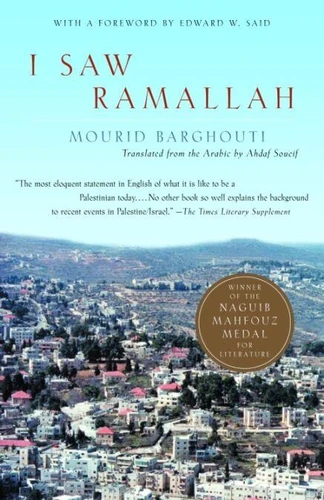
I Saw Ramallah
Par : ,Formats :
Disponible dans votre compte client Decitre ou Furet du Nord dès validation de votre commande. Le format ePub protégé est :
- Compatible avec une lecture sur My Vivlio (smartphone, tablette, ordinateur)
- Compatible avec une lecture sur liseuses Vivlio
- Pour les liseuses autres que Vivlio, vous devez utiliser le logiciel Adobe Digital Edition. Non compatible avec la lecture sur les liseuses Kindle, Remarkable et Sony
- Non compatible avec un achat hors France métropolitaine
 , qui est-ce ?
Notre partenaire de plateforme de lecture numérique où vous retrouverez l'ensemble de vos ebooks gratuitement
Pour en savoir plus sur nos ebooks, consultez notre aide en ligne ici
C'est si simple ! Lisez votre ebook avec l'app Vivlio sur votre tablette, mobile ou ordinateur :

- Nombre de pages208
- FormatePub
- ISBN978-0-307-48614-1
- EAN9780307486141
- Date de parution10/12/2008
- Protection num.Adobe DRM
- Taille610 Ko
- Infos supplémentairesepub
- ÉditeurVintage
Résumé
WINNER OF THE NAGUIB MAHFOUZ MEDAL FOR LITERATUREA fierce and moving work and an unparalleled rendering of the human aspects of the Palestinian predicament. Barred from his homeland after 1967's Six-Day War, the poet Mourid Barghouti spent thirty years in exile-shuttling among the world's cities, yet secure in none of them; separated from his family for years at a time; never certain whether he was a visitor, a refugee, a citizen, or a guest.
As he returns home for the first time since the Israeli occupation, Barghouti crosses a wooden bridge over the Jordan River into Ramallah and is unable to recognize the city of his youth. Sifting through memories of the old Palestine as they come up against what he now encounters in this mere "idea of Palestine, " he discovers what it means to be deprived not only of a homeland but of "the habitual place and status of a person." A tour de force of memory and reflection, lamentation and resilience, I Saw Ramallah is a deeply humane book, essential to any balanced understanding of today's Middle East.
As he returns home for the first time since the Israeli occupation, Barghouti crosses a wooden bridge over the Jordan River into Ramallah and is unable to recognize the city of his youth. Sifting through memories of the old Palestine as they come up against what he now encounters in this mere "idea of Palestine, " he discovers what it means to be deprived not only of a homeland but of "the habitual place and status of a person." A tour de force of memory and reflection, lamentation and resilience, I Saw Ramallah is a deeply humane book, essential to any balanced understanding of today's Middle East.