SOLDES
Jusqu'à -70% sur une sélection d'articles*

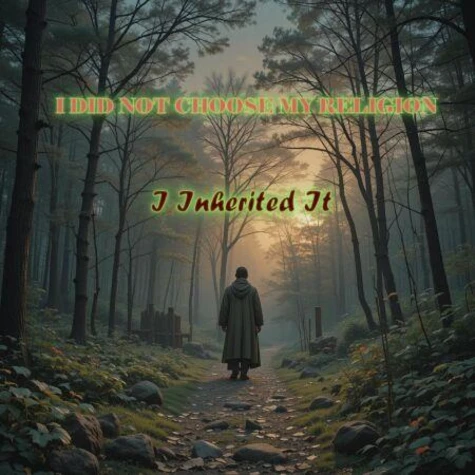
I DID NOT CHOOSE MY RELIGION: I Inherited It
Par :Formats :
Disponible dans votre compte client Decitre ou Furet du Nord dès validation de votre commande. Le format ePub est :
- Compatible avec une lecture sur My Vivlio (smartphone, tablette, ordinateur)
- Compatible avec une lecture sur liseuses Vivlio
- Pour les liseuses autres que Vivlio, vous devez utiliser le logiciel Adobe Digital Edition. Non compatible avec la lecture sur les liseuses Kindle, Remarkable et Sony
 , qui est-ce ?
Notre partenaire de plateforme de lecture numérique où vous retrouverez l'ensemble de vos ebooks gratuitement
Pour en savoir plus sur nos ebooks, consultez notre aide en ligne ici
C'est si simple ! Lisez votre ebook avec l'app Vivlio sur votre tablette, mobile ou ordinateur :

- FormatePub
- ISBN8231311620
- EAN9798231311620
- Date de parution29/07/2025
- Protection num.pas de protection
- Infos supplémentairesepub
- ÉditeurWalzone Press
Résumé
I Did Not Choose My Religion: I Inherited It is a raw, lyrical, and soul-wrenching journey through inherited belief, generational trauma, religious indoctrination, and the painful awakening of conscience. Told in poetic prose and first-person narration, this work weaves memoir, theology, psychology, and protest literature into a single tapestry of reckoning. It begins not with rebellion, but with obedience.
The narrator is born into faith - not by conviction, but by inheritance. Before he learns his name, he is given the creed. Before he learns to walk, he is taught to bow. Faith is not a discovery - it is a wound passed down as legacy. A chain of belief forged by conquest, reinforced through fear, and praised as salvation. His story begins with milk and memory, and a whispered prayer in the dark: not a choice, but a command.
He begins to reflect on the pain caused - not only to himself, but to others - by his silence, his complicity, his borrowed certainty. He remembers the boy flogged for asking what came before the prophet. The girl stoned for dancing in the rain. The cousin killed for daring to remember a different god. And he remembers that he said nothing. He learns that the deepest prison is the one built of unanswered questions - and inherited answers.
This is not a book of atheism. Nor is it an attack on religion itself. It is a confrontation with blind obedience. It is a call to conscience. It is for anyone who has ever inherited a faith they could not question. For anyone who has defended what they could not explain. For anyone who has silenced their doubts in the name of belonging. It is for those who ache quietly in pews, in prayer rooms, in temples - and wonder if they're alone.
This book is a mirror for the soul - not to show you what you were told to be, but to show you what you already are.
The narrator is born into faith - not by conviction, but by inheritance. Before he learns his name, he is given the creed. Before he learns to walk, he is taught to bow. Faith is not a discovery - it is a wound passed down as legacy. A chain of belief forged by conquest, reinforced through fear, and praised as salvation. His story begins with milk and memory, and a whispered prayer in the dark: not a choice, but a command.
He begins to reflect on the pain caused - not only to himself, but to others - by his silence, his complicity, his borrowed certainty. He remembers the boy flogged for asking what came before the prophet. The girl stoned for dancing in the rain. The cousin killed for daring to remember a different god. And he remembers that he said nothing. He learns that the deepest prison is the one built of unanswered questions - and inherited answers.
This is not a book of atheism. Nor is it an attack on religion itself. It is a confrontation with blind obedience. It is a call to conscience. It is for anyone who has ever inherited a faith they could not question. For anyone who has defended what they could not explain. For anyone who has silenced their doubts in the name of belonging. It is for those who ache quietly in pews, in prayer rooms, in temples - and wonder if they're alone.
This book is a mirror for the soul - not to show you what you were told to be, but to show you what you already are.