
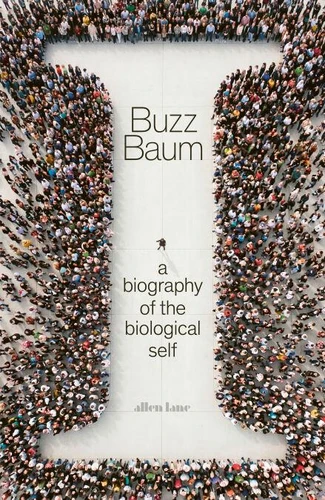
I. A Biography of the Biological Self
Par :Formats :
Disponible dans votre compte client Decitre ou Furet du Nord dès validation de votre commande. Le format ePub protégé est :
- Compatible avec une lecture sur My Vivlio (smartphone, tablette, ordinateur)
- Compatible avec une lecture sur liseuses Vivlio
- Pour les liseuses autres que Vivlio, vous devez utiliser le logiciel Adobe Digital Edition. Non compatible avec la lecture sur les liseuses Kindle, Remarkable et Sony
- Non compatible avec un achat hors France métropolitaine
 , qui est-ce ?
Notre partenaire de plateforme de lecture numérique où vous retrouverez l'ensemble de vos ebooks gratuitement
Pour en savoir plus sur nos ebooks, consultez notre aide en ligne ici
C'est si simple ! Lisez votre ebook avec l'app Vivlio sur votre tablette, mobile ou ordinateur :

- Nombre de pages320
- Date de parution04/02/2027
- FormatePub
- ISBN978-1-80206-979-2
- EAN9781802069792
- Protection num.Adobe DRM
- Infos supplémentairesepub
- ÉditeurPenguin
Résumé
Each of us experiences life as a continual flood of sensations and thoughts that give us a powerful sense of being a singular individual 'I'. But defining ourselves this way misses much that is unique and extraordinary about being human. We are the product of four billion years of evolution, shaped by the divergence and merger of different lineages. Our bodies are beautiful at every scale, down to the trillions of cells from which we are made.
The unity of life on Earth becomes clear under the microscope, where many differences fall away: malaria parasites, puffballs and humans all share a common cellular organisation, parts, processes and a common language. Zooming out, each one of us is also a small part of larger wholes - families, communities, and the natural world. This entangled web of interactions also makes us who we are and gives us identity and purpose.
So, it is often more accurate to say 'we' than 'I'. Through fact, fiction and stories drawn from life, this book offers a deeper appreciation of what it means to be human and alive and points towards ways of aligning our lives with the other creatures with whom we share this beautiful planet.
The unity of life on Earth becomes clear under the microscope, where many differences fall away: malaria parasites, puffballs and humans all share a common cellular organisation, parts, processes and a common language. Zooming out, each one of us is also a small part of larger wholes - families, communities, and the natural world. This entangled web of interactions also makes us who we are and gives us identity and purpose.
So, it is often more accurate to say 'we' than 'I'. Through fact, fiction and stories drawn from life, this book offers a deeper appreciation of what it means to be human and alive and points towards ways of aligning our lives with the other creatures with whom we share this beautiful planet.