SOLDES
Jusqu'à -70% sur une sélection d'articles*

Nouveauté
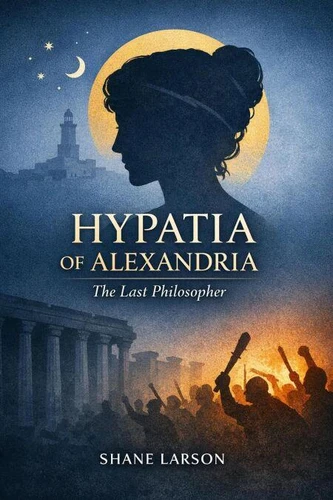
Hypatia of Alexandria: The Last Philosopher
Par :Formats :
Disponible dans votre compte client Decitre ou Furet du Nord dès validation de votre commande. Le format ePub est :
- Compatible avec une lecture sur My Vivlio (smartphone, tablette, ordinateur)
- Compatible avec une lecture sur liseuses Vivlio
- Pour les liseuses autres que Vivlio, vous devez utiliser le logiciel Adobe Digital Edition. Non compatible avec la lecture sur les liseuses Kindle, Remarkable et Sony
 , qui est-ce ?
Notre partenaire de plateforme de lecture numérique où vous retrouverez l'ensemble de vos ebooks gratuitement
Pour en savoir plus sur nos ebooks, consultez notre aide en ligne ici
C'est si simple ! Lisez votre ebook avec l'app Vivlio sur votre tablette, mobile ou ordinateur :

- FormatePub
- ISBN8235942066
- EAN9798235942066
- Date de parution26/06/2026
- Protection num.pas de protection
- Infos supplémentairesepub
- ÉditeurIoakim Ioakim
Résumé
In March of 415, the most respected scholar in Alexandria was dragged from her carriage, killed inside a church, and torn to pieces in the street. The Roman inquiry that followed never named a single guilty party. The man whose followers did it was later made a saint. Hypatia ran the Neoplatonic school of Alexandria. She wrote commentaries on Apollonius of Perga and Diophantus of Alexandria that scholars copied across the Mediterranean, refined the design of the astrolabe, and counted the Roman prefect of Egypt among those who came to her for counsel.
Her students were pagan and Christian alike. By every contemporary account she was one of the sharpest minds of late antiquity - and she died because she stood between two men fighting over who would rule the city. That fight was not hers. The civil prefect Orestes and the rising patriarch Cyril were locked in a struggle over the soul and the streets of Alexandria, and Hypatia - close to Orestes, admired across the divide, too prominent to ignore - became the point where it broke.
A mob tied to Cyril's network pulled her from her chariot, hauled her into a former temple turned church, and beat her to death with shards of roof tile. They tore her body apart and burned the pieces outside the walls. Hypatia of Alexandria: The Last Philosopher reconstructs the whole arc - the woman, the city, the murder, and the long centuries of misremembering that followed. What's inside: The Alexandria of the fourth century - its schools, its faiths, its dangerously combustible streets Theon and the scholarly household that shaped his daughter into a public intellectual What Hypatia actually taught: Neoplatonism, mathematics, astronomy, and the instruments she helped refine Synesius of Cyrene - student, future bishop, and the source of the most personal glimpse of her we will ever have The Theodosian laws that stripped legal protection from pagan public life The destruction of the Serapeum in 391 and the library lost with it Cyril's contested rise in 412 and the parabalani who became his enforcers The expulsion of Alexandria's Jewish community in 414 and the Ammonius affair that lit the fuse The attack itself, reconstructed source by source - and the imperial cover-up that buried it Why "the last philosopher" is a label that is partly true and partly invented - and how every age since, from Gibbon to the 2009 film Agora, has remade her in its own image This book is for you if you love narrative nonfiction set in a single dramatic moment, you're drawn to late antiquity and the Christianization of Rome, you're fascinated by women in ancient intellectual life, or you watched Agora and wanted the real story behind it.
From the author of Library of Alexandria, Cleopatra's Egypt, The Ptolemies, Marcus Aurelius, Epictetus, Zenobia of Palmyra, Hatshepsut, Akhenaten, and Nefertiti. This is the direct sequel to Library of Alexandria and the closing movement of the catalog's Alexandrian thread. The mob is gone. The patriarch is gone. The prefect is gone. The roof tiles are dust. The name remembers.
Her students were pagan and Christian alike. By every contemporary account she was one of the sharpest minds of late antiquity - and she died because she stood between two men fighting over who would rule the city. That fight was not hers. The civil prefect Orestes and the rising patriarch Cyril were locked in a struggle over the soul and the streets of Alexandria, and Hypatia - close to Orestes, admired across the divide, too prominent to ignore - became the point where it broke.
A mob tied to Cyril's network pulled her from her chariot, hauled her into a former temple turned church, and beat her to death with shards of roof tile. They tore her body apart and burned the pieces outside the walls. Hypatia of Alexandria: The Last Philosopher reconstructs the whole arc - the woman, the city, the murder, and the long centuries of misremembering that followed. What's inside: The Alexandria of the fourth century - its schools, its faiths, its dangerously combustible streets Theon and the scholarly household that shaped his daughter into a public intellectual What Hypatia actually taught: Neoplatonism, mathematics, astronomy, and the instruments she helped refine Synesius of Cyrene - student, future bishop, and the source of the most personal glimpse of her we will ever have The Theodosian laws that stripped legal protection from pagan public life The destruction of the Serapeum in 391 and the library lost with it Cyril's contested rise in 412 and the parabalani who became his enforcers The expulsion of Alexandria's Jewish community in 414 and the Ammonius affair that lit the fuse The attack itself, reconstructed source by source - and the imperial cover-up that buried it Why "the last philosopher" is a label that is partly true and partly invented - and how every age since, from Gibbon to the 2009 film Agora, has remade her in its own image This book is for you if you love narrative nonfiction set in a single dramatic moment, you're drawn to late antiquity and the Christianization of Rome, you're fascinated by women in ancient intellectual life, or you watched Agora and wanted the real story behind it.
From the author of Library of Alexandria, Cleopatra's Egypt, The Ptolemies, Marcus Aurelius, Epictetus, Zenobia of Palmyra, Hatshepsut, Akhenaten, and Nefertiti. This is the direct sequel to Library of Alexandria and the closing movement of the catalog's Alexandrian thread. The mob is gone. The patriarch is gone. The prefect is gone. The roof tiles are dust. The name remembers.
A propos de Shane Larson









4,49 €
3,49 €