SOLDES
Jusqu'à -70% sur une sélection d'articles*

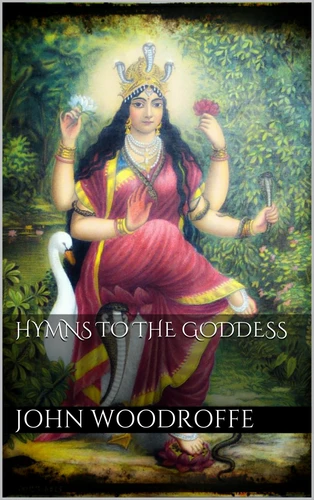
Hymns to the Goddess
Par :Formats :
Disponible dans votre compte client Decitre ou Furet du Nord dès validation de votre commande. Le format ePub est :
- Compatible avec une lecture sur My Vivlio (smartphone, tablette, ordinateur)
- Compatible avec une lecture sur liseuses Vivlio
- Pour les liseuses autres que Vivlio, vous devez utiliser le logiciel Adobe Digital Edition. Non compatible avec la lecture sur les liseuses Kindle, Remarkable et Sony
 , qui est-ce ?
Notre partenaire de plateforme de lecture numérique où vous retrouverez l'ensemble de vos ebooks gratuitement
Pour en savoir plus sur nos ebooks, consultez notre aide en ligne ici
C'est si simple ! Lisez votre ebook avec l'app Vivlio sur votre tablette, mobile ou ordinateur :

- Nombre de pages180
- FormatePub
- ISBN978-3-7481-5778-6
- EAN9783748157786
- Date de parution28/12/2018
- Protection num.Digital Watermarking
- Taille524 Ko
- Infos supplémentairesepub
- ÉditeurBooks on Demand
Résumé
She is seen as one and as many: as it were, but one moon reflected in countless waters.
She exists, too, in all animals and inorganic things, since the universe, with all its beauties, is, as the Devi Purana says, but a part of Her. All this diversity of form is but the infinite manifestations of the flowering beauty of the one Supreme Life-a doctrine which is nowhere else taught with greater wealth of illustration than in the Sakta Sastras and Tantras.
The great Bharga in the bright sun, and all Devata, and, indeed, all life and being are worshipful, and are worshipped, but only as Her manifestations. And he who worships them otherwise is, in the words of the great Devibhagavata, "like unto a man who, with the light of a clear lamp in his hands, yet falls into some waterless and terrible well." It is customary nowadays to decry external worship, but those who do so presume too much.
The ladder of ascent can only be scaled by those who have trod all, including its lowest, rungs. The Saktirahasya summarises the stages of progress in a short verse, thus: "A mortal who worships by ceremonies, by images, by mind, by identification, by knowing the self, attains kaivalya." Before brahma-bhava can be attained the sadhaka must have passed from pujabhava through hymns and prayer to dhyana-bhava.
The highest worship for which the sadhaka is qualified (adhikari) only after external worship, and that internal form known as sadhara is described as niradhara. Therein Pure Intelligence is the Supreme Sakti who is worshipped as the Very Self, the Witness freed of the glamour of the manifold universe. By one's own direct experience of Mahesvari as the Self, She is, with reverence, made the object of that worship which leads to liberation.
The great Bharga in the bright sun, and all Devata, and, indeed, all life and being are worshipful, and are worshipped, but only as Her manifestations. And he who worships them otherwise is, in the words of the great Devibhagavata, "like unto a man who, with the light of a clear lamp in his hands, yet falls into some waterless and terrible well." It is customary nowadays to decry external worship, but those who do so presume too much.
The ladder of ascent can only be scaled by those who have trod all, including its lowest, rungs. The Saktirahasya summarises the stages of progress in a short verse, thus: "A mortal who worships by ceremonies, by images, by mind, by identification, by knowing the self, attains kaivalya." Before brahma-bhava can be attained the sadhaka must have passed from pujabhava through hymns and prayer to dhyana-bhava.
The highest worship for which the sadhaka is qualified (adhikari) only after external worship, and that internal form known as sadhara is described as niradhara. Therein Pure Intelligence is the Supreme Sakti who is worshipped as the Very Self, the Witness freed of the glamour of the manifold universe. By one's own direct experience of Mahesvari as the Self, She is, with reverence, made the object of that worship which leads to liberation.