
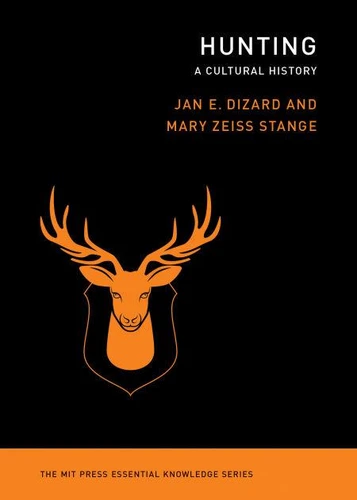
Hunting. A Cultural History
Par : ,Formats :
Disponible dans votre compte client Decitre ou Furet du Nord dès validation de votre commande. Le format ePub protégé est :
- Compatible avec une lecture sur My Vivlio (smartphone, tablette, ordinateur)
- Compatible avec une lecture sur liseuses Vivlio
- Pour les liseuses autres que Vivlio, vous devez utiliser le logiciel Adobe Digital Edition. Non compatible avec la lecture sur les liseuses Kindle, Remarkable et Sony
- Non compatible avec un achat hors France métropolitaine
 , qui est-ce ?
Notre partenaire de plateforme de lecture numérique où vous retrouverez l'ensemble de vos ebooks gratuitement
Pour en savoir plus sur nos ebooks, consultez notre aide en ligne ici
C'est si simple ! Lisez votre ebook avec l'app Vivlio sur votre tablette, mobile ou ordinateur :

- Nombre de pages248
- FormatePub
- ISBN978-0-262-36826-1
- EAN9780262368261
- Date de parution04/10/2022
- Protection num.Adobe DRM
- Taille373 Ko
- Infos supplémentairesepub
- ÉditeurThe MIT Press
Résumé
The history of hunting, from Stone Age hunter-gatherers to today's sport hunters. Hunting has a long history, beginning with our hominid ancestors. The invention of the spear allowed early humans to graduate from scavenging to actual hunting. The famous cave paintings at Lascaux show a meticulous knowledge of animal behavior and anatomy that only a hunter would have. This volume in the MIT Press Essential Knowledge series traces the evolution of hunting, from Stone Age hunting and gathering to today's regulated sport hunting. Humans have been hunting since we became human-but did hunting make us human? The authors consider and question the "hunting hypothesis of human origins, " noting that according to this theory, "hunting" meant hunting by men.
They explore hunting in the Stone Age and how, beginning some ten thousand years ago, the spread of agriculture led to the emergence of empires and attempts by elites to monopolize hunting. They examine the democratization of hunting in the American colonies and how hunters decimated, but then, in the twentieth century, rallied to save game animals from extinction. They describe how some European and postcolonial societies have managed wildlife and hunting, consider the difficulties of living with abundant wildlife-even as many nongame species are disappearing-and trace the implications of the increasing participation of women in hunting for the future of hunting.
They explore hunting in the Stone Age and how, beginning some ten thousand years ago, the spread of agriculture led to the emergence of empires and attempts by elites to monopolize hunting. They examine the democratization of hunting in the American colonies and how hunters decimated, but then, in the twentieth century, rallied to save game animals from extinction. They describe how some European and postcolonial societies have managed wildlife and hunting, consider the difficulties of living with abundant wildlife-even as many nongame species are disappearing-and trace the implications of the increasing participation of women in hunting for the future of hunting.