
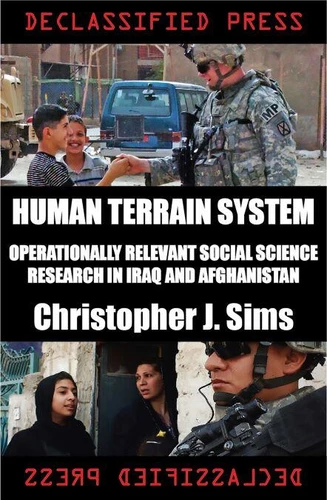
Human Terrain System. Operationally Relevant Social Science Research in Iraq and Afghanistan
Par :Formats :
Disponible dans votre compte client Decitre ou Furet du Nord dès validation de votre commande. Le format ePub est :
- Compatible avec une lecture sur My Vivlio (smartphone, tablette, ordinateur)
- Compatible avec une lecture sur liseuses Vivlio
- Pour les liseuses autres que Vivlio, vous devez utiliser le logiciel Adobe Digital Edition. Non compatible avec la lecture sur les liseuses Kindle, Remarkable et Sony
 , qui est-ce ?
Notre partenaire de plateforme de lecture numérique où vous retrouverez l'ensemble de vos ebooks gratuitement
Pour en savoir plus sur nos ebooks, consultez notre aide en ligne ici
C'est si simple ! Lisez votre ebook avec l'app Vivlio sur votre tablette, mobile ou ordinateur :

- Nombre de pages400
- FormatePub
- ISBN978-3-96376-435-6
- EAN9783963764356
- Date de parution19/04/2018
- Protection num.Digital Watermarking
- Taille2 Mo
- Infos supplémentairesepub
- ÉditeurStrelbytskyy Multimedia Publis
Résumé
To avoid the footpaths which may have been mined with improvised explosive devices (IEDs), Ryan Evans, a U. S. federal civilian, was walking across a wheat field in Babaji, Helmand Province, in the spring of 2011. Evans was attached to the Royal Highland Fusiliers (2 Scots), C Company, a heavy infantry patrol tasked with providing security in the vicinity. Begun 2 years earlier, the Helmand Food Zone Program was a form of development intervention which offered subsidies, seed, and fertilizers to farmers who replaced lucrative opium cultivation from poppies with growing and harvesting wheat and vegetable crops.
Babaji had been in the control of insurgents until a few months earlier and had not received any assistance from the program during the previous year; consequently, there were tensions between the community and British forces. As Evans and the patrol emerged from the field, an Afghan man sitting nearby, clearly irate, shouted in Pashto that the British soldiers had wanted the farmer to grow wheat instead of poppy, and then the same British soldiers walked through their fields.
At the immediate level, the encounter demonstrated the direct link between conflict, food security, and local trade, but conflict has many interrelated and mutual dependencies such that the anecdote is instructive on myriad broader milieus. Where, for example, is the tipping point that makes a civilian value creating an expression of discontent to a heavily armed patrol above his immediate physical security? Do livelihoods and cultures affect military strategies? Are there interdependencies between insurgencies, societies, and economies? Does the language of war require a sociological grammar in order to be understood? Armed conflict is a human enterprise such that, by extension, understanding of the human dimension in a given area of operations should be thought integral to planning successful operations...
Babaji had been in the control of insurgents until a few months earlier and had not received any assistance from the program during the previous year; consequently, there were tensions between the community and British forces. As Evans and the patrol emerged from the field, an Afghan man sitting nearby, clearly irate, shouted in Pashto that the British soldiers had wanted the farmer to grow wheat instead of poppy, and then the same British soldiers walked through their fields.
At the immediate level, the encounter demonstrated the direct link between conflict, food security, and local trade, but conflict has many interrelated and mutual dependencies such that the anecdote is instructive on myriad broader milieus. Where, for example, is the tipping point that makes a civilian value creating an expression of discontent to a heavily armed patrol above his immediate physical security? Do livelihoods and cultures affect military strategies? Are there interdependencies between insurgencies, societies, and economies? Does the language of war require a sociological grammar in order to be understood? Armed conflict is a human enterprise such that, by extension, understanding of the human dimension in a given area of operations should be thought integral to planning successful operations...