SOLDES
Jusqu'à -70% sur une sélection d'articles*

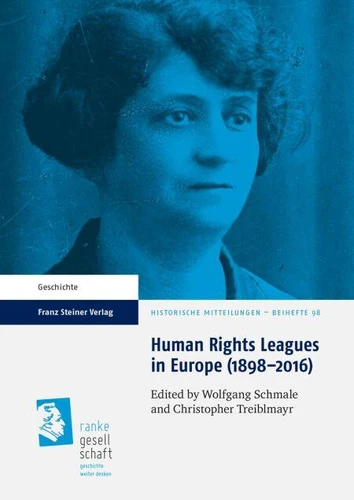
Human Rights Leagues in Europe (1898-2016)
Par : ,Formats :
Disponible dans votre compte client Decitre ou Furet du Nord dès validation de votre commande. Le format PDF est :
- Compatible avec une lecture sur My Vivlio (smartphone, tablette, ordinateur)
- Compatible avec une lecture sur liseuses Vivlio
- Pour les liseuses autres que Vivlio, vous devez utiliser le logiciel Adobe Digital Edition. Non compatible avec la lecture sur les liseuses Kindle, Remarkable et Sony
 , qui est-ce ?
Notre partenaire de plateforme de lecture numérique où vous retrouverez l'ensemble de vos ebooks gratuitement
Pour en savoir plus sur nos ebooks, consultez notre aide en ligne ici
C'est si simple ! Lisez votre ebook avec l'app Vivlio sur votre tablette, mobile ou ordinateur :

- Nombre de pages323
- FormatPDF
- ISBN978-3-515-11634-3
- EAN9783515116343
- Date de parution28/04/2017
- Protection num.Digital Watermarking
- Taille5 Mo
- Infos supplémentairespdf
- ÉditeurFranz Steiner
Résumé
When the French Ligue des droits de l'homme was founded in 1898, it was the world's first league for human rights. Over the following decades, human rights leagues were formed in many other countries following its example, and from 1922, they advocated for a universal human rights ideal under the auspices of a shared umbrella organization. The majority of these leagues were forced to interrupt their activities at some point, especially during the National Socialist period.
After World War II, many leagues experienced a renaissance. Not least through their cooperation with the United Nations, they significantly contributed to the global acceptance of the very idea of human rights in the second half of the 20th century. The contributors in this volume break new ground: they provide a so-far lacking overview of international research on human rights leagues, synthesizing it and identifying research desiderata.
Some of the presented civil society associations, like those in Eastern Europe, have never before been subject to scholarly consideration.
After World War II, many leagues experienced a renaissance. Not least through their cooperation with the United Nations, they significantly contributed to the global acceptance of the very idea of human rights in the second half of the 20th century. The contributors in this volume break new ground: they provide a so-far lacking overview of international research on human rights leagues, synthesizing it and identifying research desiderata.
Some of the presented civil society associations, like those in Eastern Europe, have never before been subject to scholarly consideration.
A propos de Wolfgang Schmale



28,00 €
39,00 €
21,99 €