SOLDES
Jusqu'à -70% sur une sélection d'articles*

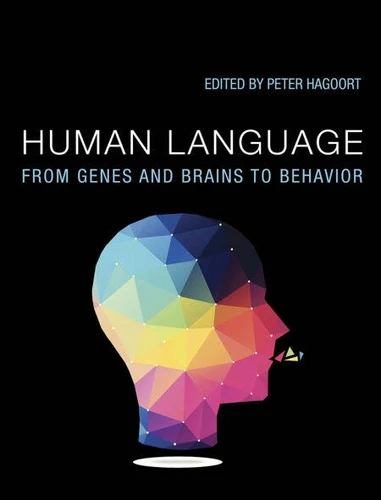
Human Language. From Genes and Brains to Behavior
Par :Formats :
Disponible dans votre compte client Decitre ou Furet du Nord dès validation de votre commande. Le format ePub protégé est :
- Compatible avec une lecture sur My Vivlio (smartphone, tablette, ordinateur)
- Compatible avec une lecture sur liseuses Vivlio
- Pour les liseuses autres que Vivlio, vous devez utiliser le logiciel Adobe Digital Edition. Non compatible avec la lecture sur les liseuses Kindle, Remarkable et Sony
- Non compatible avec un achat hors France métropolitaine
 , qui est-ce ?
Notre partenaire de plateforme de lecture numérique où vous retrouverez l'ensemble de vos ebooks gratuitement
Pour en savoir plus sur nos ebooks, consultez notre aide en ligne ici
C'est si simple ! Lisez votre ebook avec l'app Vivlio sur votre tablette, mobile ou ordinateur :

- Nombre de pages752
- FormatePub
- ISBN978-0-262-35387-8
- EAN9780262353878
- Date de parution29/10/2019
- Protection num.Adobe DRM
- Taille102 Mo
- Infos supplémentairesepub
- ÉditeurThe MIT Press
Résumé
A unique overview of the human language faculty at all levels of organization. Language is not only one of the most complex cognitive functions that we command, it is also the aspect of the mind that makes us uniquely human. Research suggests that the human brain exhibits a language readiness not found in the brains of other species. This volume brings together contributions from a range of fields to examine humans' language capacity from multiple perspectives, analyzing it at genetic, neurobiological, psychological, and linguistic levels.
In recent decades, advances in computational modeling, neuroimaging, and genetic sequencing have made possible new approaches to the study of language, and the contributors draw on these developments. The book examines cognitive architectures, investigating the functional organization of the major language skills; learning and development trajectories, summarizing the current understanding of the steps and neurocognitive mechanisms in language processing; evolutionary and other preconditions for communication by means of natural language; computational tools for modeling language; cognitive neuroscientific methods that allow observations of the human brain in action, including fMRI, EEG/MEG, and others; the neural infrastructure of language capacity; the genome's role in building and maintaining the language-ready brain; and insights from studying such language-relevant behaviors in nonhuman animals as birdsong and primate vocalization.
Section editorsChristian F. Beckmann, Carel ten Cate, Simon E. Fisher, Peter Hagoort, Evan Kidd, Stephen C. Levinson, James M. McQueen, Antje S. Meyer, David Poeppel, Caroline F. Rowland, Constance Scharff, Ivan Toni, Willem Zuidema
In recent decades, advances in computational modeling, neuroimaging, and genetic sequencing have made possible new approaches to the study of language, and the contributors draw on these developments. The book examines cognitive architectures, investigating the functional organization of the major language skills; learning and development trajectories, summarizing the current understanding of the steps and neurocognitive mechanisms in language processing; evolutionary and other preconditions for communication by means of natural language; computational tools for modeling language; cognitive neuroscientific methods that allow observations of the human brain in action, including fMRI, EEG/MEG, and others; the neural infrastructure of language capacity; the genome's role in building and maintaining the language-ready brain; and insights from studying such language-relevant behaviors in nonhuman animals as birdsong and primate vocalization.
Section editorsChristian F. Beckmann, Carel ten Cate, Simon E. Fisher, Peter Hagoort, Evan Kidd, Stephen C. Levinson, James M. McQueen, Antje S. Meyer, David Poeppel, Caroline F. Rowland, Constance Scharff, Ivan Toni, Willem Zuidema