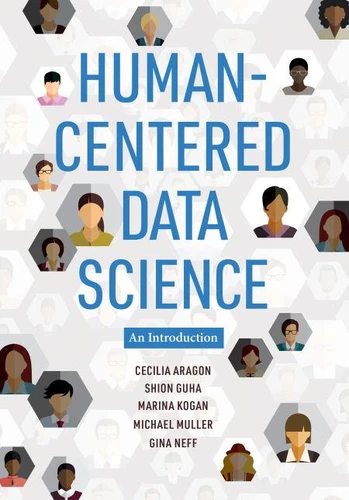
Human-Centered Data Science. An Introduction
Par : , , , ,Formats :
Disponible dans votre compte client Decitre ou Furet du Nord dès validation de votre commande. Le format ePub protégé est :
- Compatible avec une lecture sur My Vivlio (smartphone, tablette, ordinateur)
- Compatible avec une lecture sur liseuses Vivlio
- Pour les liseuses autres que Vivlio, vous devez utiliser le logiciel Adobe Digital Edition. Non compatible avec la lecture sur les liseuses Kindle, Remarkable et Sony
- Non compatible avec un achat hors France métropolitaine
 , qui est-ce ?
Notre partenaire de plateforme de lecture numérique où vous retrouverez l'ensemble de vos ebooks gratuitement
Pour en savoir plus sur nos ebooks, consultez notre aide en ligne ici
C'est si simple ! Lisez votre ebook avec l'app Vivlio sur votre tablette, mobile ou ordinateur :

- Nombre de pages200
- FormatePub
- ISBN978-0-262-36759-2
- EAN9780262367592
- Date de parution01/03/2022
- Protection num.Adobe DRM
- Taille4 Mo
- Infos supplémentairesepub
- ÉditeurThe MIT Press
Résumé
Best practices for addressing the bias and inequality that may result from the automated collection, analysis, and distribution of large datasets. Human-centered data science is a new interdisciplinary field that draws from human-computer interaction, social science, statistics, and computational techniques. This book, written by founders of the field, introduces best practices for addressing the bias and inequality that may result from the automated collection, analysis, and distribution of very large datasets.
It offers a brief and accessible overview of many common statistical and algorithmic data science techniques, explains human-centered approaches to data science problems, and presents practical guidelines and real-world case studies to help readers apply these methods. The authors explain how data scientists' choices are involved at every stage of the data science workflow-and show how a human-centered approach can enhance each one, by making the process more transparent, asking questions, and considering the social context of the data.
They describe how tools from social science might be incorporated into data science practices, discuss different types of collaboration, and consider data storytelling through visualization. The book shows that data science practitioners can build rigorous and ethical algorithms and design projects that use cutting-edge computational tools and address social concerns.
It offers a brief and accessible overview of many common statistical and algorithmic data science techniques, explains human-centered approaches to data science problems, and presents practical guidelines and real-world case studies to help readers apply these methods. The authors explain how data scientists' choices are involved at every stage of the data science workflow-and show how a human-centered approach can enhance each one, by making the process more transparent, asking questions, and considering the social context of the data.
They describe how tools from social science might be incorporated into data science practices, discuss different types of collaboration, and consider data storytelling through visualization. The book shows that data science practitioners can build rigorous and ethical algorithms and design projects that use cutting-edge computational tools and address social concerns.