SOLDES
Jusqu'à -70% sur une sélection d'articles*

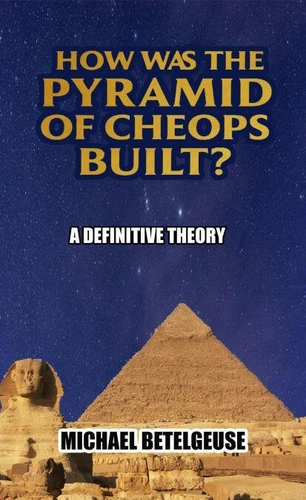
How was the Piramid of Cheops Built? A Definitive Theory
Par :Formats :
Disponible dans votre compte client Decitre ou Furet du Nord dès validation de votre commande. Le format ePub protégé est :
- Compatible avec une lecture sur My Vivlio (smartphone, tablette, ordinateur)
- Compatible avec une lecture sur liseuses Vivlio
- Pour les liseuses autres que Vivlio, vous devez utiliser le logiciel Adobe Digital Edition. Non compatible avec la lecture sur les liseuses Kindle, Remarkable et Sony
- Non compatible avec un achat hors France métropolitaine
 , qui est-ce ?
Notre partenaire de plateforme de lecture numérique où vous retrouverez l'ensemble de vos ebooks gratuitement
Pour en savoir plus sur nos ebooks, consultez notre aide en ligne ici
C'est si simple ! Lisez votre ebook avec l'app Vivlio sur votre tablette, mobile ou ordinateur :

- FormatePub
- ISBN8232212926
- EAN9798232212926
- Date de parution11/11/2025
- Protection num.Adobe DRM
- Infos supplémentairesepub
- ÉditeurDraft2Digital
Résumé
How Was the Great Pyramid of Cheops Really Built?For centuries, theories have been repeated that, when examined through logic, calculation, and common sense, crumble like poorly placed blocks. This book doesn't just challenge famous hypotheses like the "Great Ramp Theory"-it goes much further. Michael Betelgeuse applies structural thinking, technical analysis, and a provocative narrative to dismantle traditional explanations about the pyramid's construction.
From the impossible logistics of block transportation to the absence of key tools like pulleys, each chapter exposes contradictions in the official story. and proposes a bold, logical, and surprising alternative. With a direct, ironic, and meticulously reasoned style, the author asks uncomfortable questions: Can a multi-ton stone really be moved up a ramp without leaving a trace? Why wasn't the pulley invented if the need was obvious? How were the blocks fitted with such precision without lifting systems? What if the real construction method was something else.
and we simply missed it? This is not a book of easy answers. It's an invitation to think, to doubt, to reconstruct the past using logic, imagination, and common sense. When the pieces don't fit, maybe the puzzle was wrong. A work that challenges consensus, provokes the reader, and proposes a new way of looking at history.
From the impossible logistics of block transportation to the absence of key tools like pulleys, each chapter exposes contradictions in the official story. and proposes a bold, logical, and surprising alternative. With a direct, ironic, and meticulously reasoned style, the author asks uncomfortable questions: Can a multi-ton stone really be moved up a ramp without leaving a trace? Why wasn't the pulley invented if the need was obvious? How were the blocks fitted with such precision without lifting systems? What if the real construction method was something else.
and we simply missed it? This is not a book of easy answers. It's an invitation to think, to doubt, to reconstruct the past using logic, imagination, and common sense. When the pieces don't fit, maybe the puzzle was wrong. A work that challenges consensus, provokes the reader, and proposes a new way of looking at history.
A propos de Michael Betelgeuse

2,99 €

2,99 €