
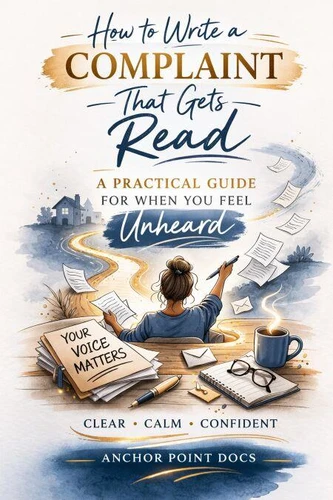
How to Write a Complaint That Gets Read
Par :Formats :
Disponible dans votre compte client Decitre ou Furet du Nord dès validation de votre commande. Le format ePub est :
- Compatible avec une lecture sur My Vivlio (smartphone, tablette, ordinateur)
- Compatible avec une lecture sur liseuses Vivlio
- Pour les liseuses autres que Vivlio, vous devez utiliser le logiciel Adobe Digital Edition. Non compatible avec la lecture sur les liseuses Kindle, Remarkable et Sony
 , qui est-ce ?
Notre partenaire de plateforme de lecture numérique où vous retrouverez l'ensemble de vos ebooks gratuitement
Pour en savoir plus sur nos ebooks, consultez notre aide en ligne ici
C'est si simple ! Lisez votre ebook avec l'app Vivlio sur votre tablette, mobile ou ordinateur :

- FormatePub
- ISBN8232210687
- EAN9798232210687
- Date de parution24/02/2026
- Protection num.pas de protection
- Infos supplémentairesepub
- ÉditeurDraft2Digital
Résumé
How to Write a Complaint That Gets Read is a practical guide for people who feel unheard, ignored, or dismissed when they raise a complaint. Many complaints fail not because the issue is unreasonable, but because it is difficult for organisations to process what is being said. Messages that are emotional, unclear, or unfocused are often delayed, redirected, or quietly set aside. This book shows how to communicate in a way that cuts through that system.
It explains how complaints are handled behind the scenes and how to write clearly, calmly, and with enough structure to make action unavoidable, without legal jargon, aggressive language, or over-explaining. This guide focuses on: Being clear without being confrontational Explaining impact without weakening your position Making firm, reasonable requests that prompt a response Following up and escalating without damaging credibility Included are plain-English templates for initial complaints, follow-ups, escalation requests, and impact statements, designed to reduce stress and remove guesswork.
If you are tired of silence, vague replies, or responses that miss the point, this book helps you put your complaint into words that are more likely to be read, processed, and addressed.
It explains how complaints are handled behind the scenes and how to write clearly, calmly, and with enough structure to make action unavoidable, without legal jargon, aggressive language, or over-explaining. This guide focuses on: Being clear without being confrontational Explaining impact without weakening your position Making firm, reasonable requests that prompt a response Following up and escalating without damaging credibility Included are plain-English templates for initial complaints, follow-ups, escalation requests, and impact statements, designed to reduce stress and remove guesswork.
If you are tired of silence, vague replies, or responses that miss the point, this book helps you put your complaint into words that are more likely to be read, processed, and addressed.