SOLDES
Jusqu'à -70% sur une sélection d'articles*

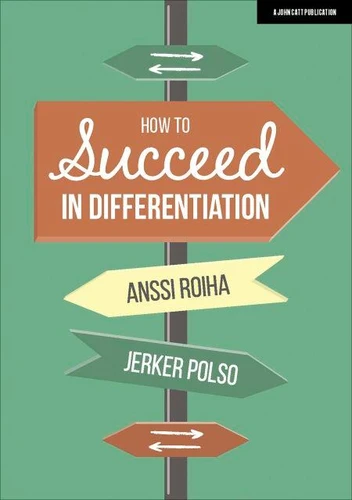
How To Succeed in Differentiation: The Finnish Approach
Par : ,Formats :
Disponible dans votre compte client Decitre ou Furet du Nord dès validation de votre commande. Le format ePub protégé est :
- Compatible avec une lecture sur My Vivlio (smartphone, tablette, ordinateur)
- Compatible avec une lecture sur liseuses Vivlio
- Pour les liseuses autres que Vivlio, vous devez utiliser le logiciel Adobe Digital Edition. Non compatible avec la lecture sur les liseuses Kindle, Remarkable et Sony
- Non compatible avec un achat hors France métropolitaine
 , qui est-ce ?
Notre partenaire de plateforme de lecture numérique où vous retrouverez l'ensemble de vos ebooks gratuitement
Pour en savoir plus sur nos ebooks, consultez notre aide en ligne ici
C'est si simple ! Lisez votre ebook avec l'app Vivlio sur votre tablette, mobile ou ordinateur :

- Nombre de pages280
- FormatePub
- ISBN978-1-3983-8290-9
- EAN9781398382909
- Date de parution13/02/2020
- Protection num.Adobe DRM
- Infos supplémentairesepub
- ÉditeurJohn Catt
Résumé
Differentiation is an approach to education in which every student's individuality and special needs are taken into account. Practical and accessible, HOW TO SUCCEED IN DIFFERENTIATION reveals the approach taken in the high-achieving Finnish education system, where the national curriculum obligates all teachers to differentiate their teaching from the get-go. The book is divided into four parts. Part I explains the background of Finnish education and differentiation in the Finnish context.
Part II investigates the theoretical basis for differentiation and strives to offer new perspectives for the most common challenges of differentiation. In addition, Part II introduces the reader to the imaginary example students, whose problems are attempted to be solved later in the book. In Part III, differentiation is approached through the five-dimensional model of differentiation, which the authors have created and which, in their opinion, covers the most central areas of teaching, in which differentiation should be acknowledged.
In Part IV, differentiation is exemplified in language and literature, mathematics and foreign languages.
Part II investigates the theoretical basis for differentiation and strives to offer new perspectives for the most common challenges of differentiation. In addition, Part II introduces the reader to the imaginary example students, whose problems are attempted to be solved later in the book. In Part III, differentiation is approached through the five-dimensional model of differentiation, which the authors have created and which, in their opinion, covers the most central areas of teaching, in which differentiation should be acknowledged.
In Part IV, differentiation is exemplified in language and literature, mathematics and foreign languages.