SOLDES
Jusqu'à -70% sur une sélection d'articles*

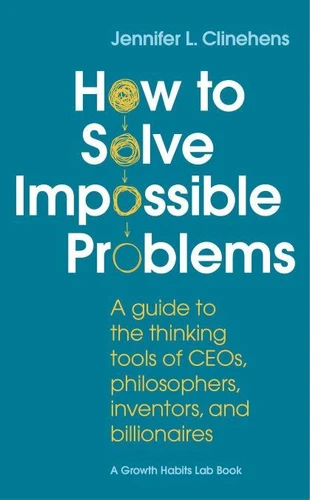
How to Solve Impossible Problems
Par :Formats :
Disponible dans votre compte client Decitre ou Furet du Nord dès validation de votre commande. Le format ePub est :
- Compatible avec une lecture sur My Vivlio (smartphone, tablette, ordinateur)
- Compatible avec une lecture sur liseuses Vivlio
- Pour les liseuses autres que Vivlio, vous devez utiliser le logiciel Adobe Digital Edition. Non compatible avec la lecture sur les liseuses Kindle, Remarkable et Sony
 , qui est-ce ?
Notre partenaire de plateforme de lecture numérique où vous retrouverez l'ensemble de vos ebooks gratuitement
Pour en savoir plus sur nos ebooks, consultez notre aide en ligne ici
C'est si simple ! Lisez votre ebook avec l'app Vivlio sur votre tablette, mobile ou ordinateur :

- FormatePub
- ISBN8201188474
- EAN9798201188474
- Date de parution18/02/2022
- Protection num.pas de protection
- Infos supplémentairesepub
- ÉditeurJL
Résumé
No matter your field of expertise, every day you're presented with seemingly impossible challenges. Issues that you or your company can't seem to crack, even after weeks, months, or years of trying. How do you approach these impossible challenges? Do you have a strategy that you follow, or do you just hold a brainstorming session and hope for the best? Do you tell yourself, "Think harder!" and pray inspiration will strike?There's a better way to solve problems like these - improve the quality of your thinking.
Better thinking, problem-solving, and reasoning are skills. They can be developed through self-examination, learning new frameworks, and expanding our mental models. Lucky for us, brilliant thinkers, creators, entrepreneurs, and philosophers - people like Elon Musk, Aristotle, Charlie Munger, Issac Newton, Ada Lovelace, Albert Einstein, Frederick Douglass, Maya Angelou, and Henry Ford - have left behind documentation, frameworks, and tools for considering impossible problems.
In "How to Solve Impossible Problems, " author Jennifer L. Clinehens (Choice Hacking, CX That Sings) presents 7 such tools to improve our thinking and help us solve what feel like insurmountable challenges. In each chapter she gives specific, actionable advice, real-world examples, and in a free companion course (available February 21, 2022) provides worksheets to help apply each principle.
Better thinking, problem-solving, and reasoning are skills. They can be developed through self-examination, learning new frameworks, and expanding our mental models. Lucky for us, brilliant thinkers, creators, entrepreneurs, and philosophers - people like Elon Musk, Aristotle, Charlie Munger, Issac Newton, Ada Lovelace, Albert Einstein, Frederick Douglass, Maya Angelou, and Henry Ford - have left behind documentation, frameworks, and tools for considering impossible problems.
In "How to Solve Impossible Problems, " author Jennifer L. Clinehens (Choice Hacking, CX That Sings) presents 7 such tools to improve our thinking and help us solve what feel like insurmountable challenges. In each chapter she gives specific, actionable advice, real-world examples, and in a free companion course (available February 21, 2022) provides worksheets to help apply each principle.