SOLDES
Jusqu'à -70% sur une sélection d'articles*

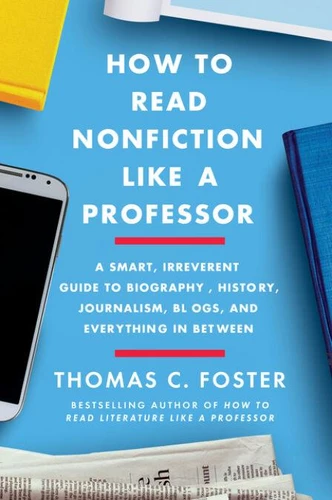
How to Read Nonfiction Like a Professor. A Smart, Irreverent Guide to Biography, History, Journalism, Blogs, and Everything in Between
Par :Formats :
Disponible dans votre compte client Decitre ou Furet du Nord dès validation de votre commande. Le format ePub protégé est :
- Compatible avec une lecture sur My Vivlio (smartphone, tablette, ordinateur)
- Compatible avec une lecture sur liseuses Vivlio
- Pour les liseuses autres que Vivlio, vous devez utiliser le logiciel Adobe Digital Edition. Non compatible avec la lecture sur les liseuses Kindle, Remarkable et Sony
- Non compatible avec un achat hors France métropolitaine
 , qui est-ce ?
Notre partenaire de plateforme de lecture numérique où vous retrouverez l'ensemble de vos ebooks gratuitement
Pour en savoir plus sur nos ebooks, consultez notre aide en ligne ici
C'est si simple ! Lisez votre ebook avec l'app Vivlio sur votre tablette, mobile ou ordinateur :

- Nombre de pages320
- FormatePub
- ISBN978-0-06-289588-2
- EAN9780062895882
- Date de parution26/05/2020
- Protection num.Adobe DRM
- Infos supplémentairesepub
- ÉditeurHarper Perennial
Résumé
The New York Times bestselling author of How to Read Literature Like a Professor uses the same skills to teach how to access accurate information in a rapidly changing 24/7 news cycle and become better readers, thinkers, and consumers of media. We live in an information age, but it is increasingly difficult to know which information to trust. Fake news is rampant in mass media, stoked by foreign powers wishing to disrupt a democratic society.
We need to be more perceptive, more critical, and more judicious readers, developing the essential skills of media literacy. The future of our republic may depend on it. How to Read Nonfiction Like a Professor is more careful, more attentive, more aware reading. On bookstore shelves, one book looks as authoritative as the next. Online, posts and memes don't announce their relative veracity. It is up to readers to establish how accurate, how thorough, how fair material may be by learning to think critically about every source.
After laying out general principles of reading nonfiction, How to Read Nonfiction Like a Professor offers advice for specific nonfiction reading strategies in various genres from histories and biographies to science and technology to social media. Throughout, the emphasis will be on identifying bias from writers, interrogating claims, analyzing arguments, remaining wary of broad assertions and easy answers, and thinking critically about the written and spoken materials readers encounter.
We can become better citizens through better reading, and the time for that is now. How can you learn to spot writers' biases, analyze arguments, and think critically about the information you encounter every day? Critical Reading: Learn the Four Ps of nonfiction (Problem, Promise, Program, and Platform) to understand any text's structure and intent from the very first page. Analyzing Arguments: Discover the building blocks of any argument-Claims, Grounds, and Warrants-so you can deconstruct a writer's case and spot logical flaws.
Evaluating Sources: From traditional journalism and biographies to the latest social media post, get specific strategies for interrogating every source you encounter. Fake News: Navigate the modern information age with confidence by learning to identify disinformation, hoaxes, and bad-faith writing online and in print.
We need to be more perceptive, more critical, and more judicious readers, developing the essential skills of media literacy. The future of our republic may depend on it. How to Read Nonfiction Like a Professor is more careful, more attentive, more aware reading. On bookstore shelves, one book looks as authoritative as the next. Online, posts and memes don't announce their relative veracity. It is up to readers to establish how accurate, how thorough, how fair material may be by learning to think critically about every source.
After laying out general principles of reading nonfiction, How to Read Nonfiction Like a Professor offers advice for specific nonfiction reading strategies in various genres from histories and biographies to science and technology to social media. Throughout, the emphasis will be on identifying bias from writers, interrogating claims, analyzing arguments, remaining wary of broad assertions and easy answers, and thinking critically about the written and spoken materials readers encounter.
We can become better citizens through better reading, and the time for that is now. How can you learn to spot writers' biases, analyze arguments, and think critically about the information you encounter every day? Critical Reading: Learn the Four Ps of nonfiction (Problem, Promise, Program, and Platform) to understand any text's structure and intent from the very first page. Analyzing Arguments: Discover the building blocks of any argument-Claims, Grounds, and Warrants-so you can deconstruct a writer's case and spot logical flaws.
Evaluating Sources: From traditional journalism and biographies to the latest social media post, get specific strategies for interrogating every source you encounter. Fake News: Navigate the modern information age with confidence by learning to identify disinformation, hoaxes, and bad-faith writing online and in print.