Cody Cook-Parrott is a writer, artist, and movement practitioner who builds simple structures that help artists make work. They write a weekly newsletter, host the podcast Common Shapes, and teach classes on quilting, writing, and creative business. They are the author of The Practice of Attention, How to Not Always be Working, and Getting to Center. Cody has a BFA in Dance and their work has been featured in the New York Times, Dance Magazine, Vanity Fair, and more.
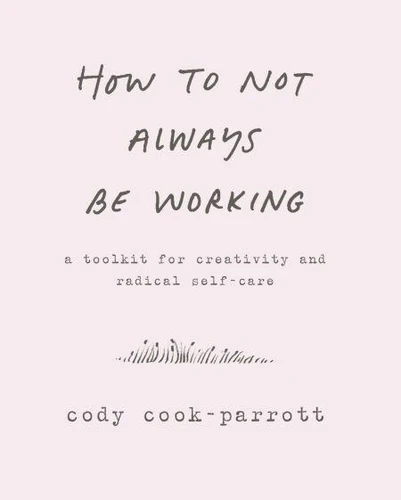
How to Not Always Be Working. A Toolkit for Creativity and Radical Self-Care
Par :Formats :
Disponible dans votre compte client Decitre ou Furet du Nord dès validation de votre commande. Le format ePub protégé est :
- Compatible avec une lecture sur My Vivlio (smartphone, tablette, ordinateur)
- Compatible avec une lecture sur liseuses Vivlio
- Pour les liseuses autres que Vivlio, vous devez utiliser le logiciel Adobe Digital Edition. Non compatible avec la lecture sur les liseuses Kindle, Remarkable et Sony
- Non compatible avec un achat hors France métropolitaine
 , qui est-ce ?
Notre partenaire de plateforme de lecture numérique où vous retrouverez l'ensemble de vos ebooks gratuitement
Pour en savoir plus sur nos ebooks, consultez notre aide en ligne ici
C'est si simple ! Lisez votre ebook avec l'app Vivlio sur votre tablette, mobile ou ordinateur :

- Nombre de pages96
- FormatePub
- ISBN978-0-06-280369-6
- EAN9780062803696
- Date de parution23/10/2018
- Protection num.Adobe DRM
- Infos supplémentairesepub
- ÉditeurMorrow Gift
Résumé
Now teaching and publishing as Cody Cook-ParrottFilled with practical advice to help you curb your unhelpful obsessions and build boundaries between your work, your job, and your life-How to Not Always Be Working is for any- and everyone who wants to create a sacred space in their lives. Part workbook, part advice manual, part love letter, How to Not Always Be Working ventures into the space where phone meets life, helping you define your work (what we do out of sense of purpose), your job (what we do to make money), and your breaks (what we do to recharge).
These boundaries help us reconnect with ourselves and the people who matter most to us. It addresses complex issues such as what to do if your work and your job are connected, provides insights to help you figure out how much is too much, and offers suggestions for making the best use of your time. Essential for everyone who feels overwhelmed and anxious about our hyper-connected world-whether you're an office worker, a student, a salesperson, or a yoga instructor-How to Not Always Be Working includes practical suggestions and thoughtful musings that prompt you to honestly examine your behavior, how you burn yourself out, and why you're doing it.
A creative manifesto for living better, it shows you how to carve sacred space in your life. Written for the bread-baker trying to do something that's just for themselves to the corporate lawyer who's always on email-and everyone in between-How to Not Always Be Working includes everything from actionable suggestions such as sleeping with your phone in a different room to philosophical prompts that invite readers to ask how they burn themselves out and why they're doing it.
These boundaries help us reconnect with ourselves and the people who matter most to us. It addresses complex issues such as what to do if your work and your job are connected, provides insights to help you figure out how much is too much, and offers suggestions for making the best use of your time. Essential for everyone who feels overwhelmed and anxious about our hyper-connected world-whether you're an office worker, a student, a salesperson, or a yoga instructor-How to Not Always Be Working includes practical suggestions and thoughtful musings that prompt you to honestly examine your behavior, how you burn yourself out, and why you're doing it.
A creative manifesto for living better, it shows you how to carve sacred space in your life. Written for the bread-baker trying to do something that's just for themselves to the corporate lawyer who's always on email-and everyone in between-How to Not Always Be Working includes everything from actionable suggestions such as sleeping with your phone in a different room to philosophical prompts that invite readers to ask how they burn themselves out and why they're doing it.