
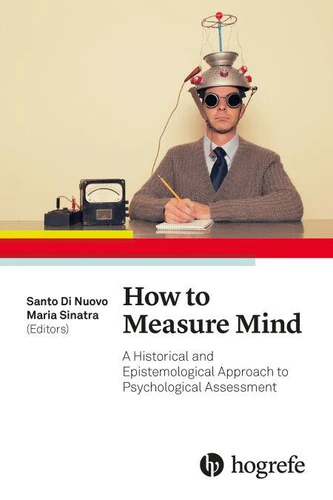
How to Measure Mind. A Historical and Epistemological Approach to Psychological Assessment
Par : ,Formats :
Disponible dans votre compte client Decitre ou Furet du Nord dès validation de votre commande. Le format ePub est :
- Compatible avec une lecture sur My Vivlio (smartphone, tablette, ordinateur)
- Compatible avec une lecture sur liseuses Vivlio
- Pour les liseuses autres que Vivlio, vous devez utiliser le logiciel Adobe Digital Edition. Non compatible avec la lecture sur les liseuses Kindle, Remarkable et Sony
 , qui est-ce ?
Notre partenaire de plateforme de lecture numérique où vous retrouverez l'ensemble de vos ebooks gratuitement
Pour en savoir plus sur nos ebooks, consultez notre aide en ligne ici
C'est si simple ! Lisez votre ebook avec l'app Vivlio sur votre tablette, mobile ou ordinateur :

- Nombre de pages152
- FormatePub
- ISBN978-1-61334-587-0
- EAN9781613345870
- Date de parution26/09/2022
- Protection num.Digital Watermarking
- Taille7 Mo
- Infos supplémentairesepub
- ÉditeurHogrefe Publishing
Résumé
Get to grips with the debate around the historical epistemological origins of psychometric assessment Written by leading experts Explores modern and historical aspects Full of illustrations A thoughtful look at the history of psychological assessment While there have been significant developments in the technical aspects of assessing mental functioning, there is still much to be debated about the motivations and meanings of measuring the mind.
How can mental faculties be objectified and what influence does subjectivity have on the object being measured and the mind measuring it? What are the consequences of quantifying complex and interdependent functions and scaling these measurements for psychometric instruments? The contributors of this edited volume explore these questions by adopting a historical and epistemological approach to consider how psychometric assessment was born and developed within the affirmation of psychology as an empirical science.
Chapters explore the birth of the scientific approach, as well as different assessment methods of cognitive abilities and personality traits, and the development of new technologies that support psychological evaluation and its applications in educational and rehabilitative fields. This book is of interest to researchers of human behavior as well as practicing psychologists and psychiatrists who want to deepen their understanding of the historical and epistemological roots of psychological assessment.
How can mental faculties be objectified and what influence does subjectivity have on the object being measured and the mind measuring it? What are the consequences of quantifying complex and interdependent functions and scaling these measurements for psychometric instruments? The contributors of this edited volume explore these questions by adopting a historical and epistemological approach to consider how psychometric assessment was born and developed within the affirmation of psychology as an empirical science.
Chapters explore the birth of the scientific approach, as well as different assessment methods of cognitive abilities and personality traits, and the development of new technologies that support psychological evaluation and its applications in educational and rehabilitative fields. This book is of interest to researchers of human behavior as well as practicing psychologists and psychiatrists who want to deepen their understanding of the historical and epistemological roots of psychological assessment.