
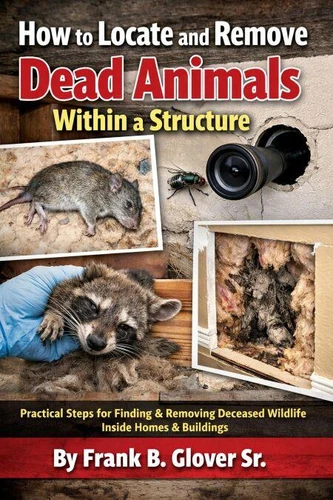
How to Locate and Remove Dead Animals Within a Structure
Par :Formats :
Disponible dans votre compte client Decitre ou Furet du Nord dès validation de votre commande. Le format ePub est :
- Compatible avec une lecture sur My Vivlio (smartphone, tablette, ordinateur)
- Compatible avec une lecture sur liseuses Vivlio
- Pour les liseuses autres que Vivlio, vous devez utiliser le logiciel Adobe Digital Edition. Non compatible avec la lecture sur les liseuses Kindle, Remarkable et Sony
 , qui est-ce ?
Notre partenaire de plateforme de lecture numérique où vous retrouverez l'ensemble de vos ebooks gratuitement
Pour en savoir plus sur nos ebooks, consultez notre aide en ligne ici
C'est si simple ! Lisez votre ebook avec l'app Vivlio sur votre tablette, mobile ou ordinateur :

- FormatePub
- ISBN8233286063
- EAN9798233286063
- Date de parution26/01/2026
- Protection num.pas de protection
- Infos supplémentairesepub
- ÉditeurLinda Balsamo
Résumé
Animals die inside structures every day-from traps, poisons, disease, injuries, and natural causes. When it happens, the odor can spread throughout a home or building, often far from the actual source. Walls, insulation, airflow, and HVAC systems can move scent in unpredictable ways, making location difficult and frustrating for homeowners and professionals alike. This is not a photo guide book this is all text explained.
In How to Locate and Remove Dead Animals Within a Structure, industry veteran Frank B. Glover Sr. shares nearly four decades of real-world pest and nuisance wildlife control experience. This guide explains why animals so often die in hidden voids and dispels the long-standing myth that rodenticides cause rodents to leave structures to die outdoors. In reality, most animals die in nests, wall cavities, attics, or crawlspaces-creating severe odor and sanitation problems.
The book breaks down how decomposition odors travel, how temperature and seasonal changes intensify smells, and why air fresheners and open windows often make detection harder. Readers learn how to interpret airflow patterns, identify high-probability locations, and narrow down odor sources without unnecessary demolition. One of the most effective techniques covered involves observing insect behavior-particularly flies-which often reveal the exact location of a carcass when tools and scopes fall short.
Practical inspection methods are explained, including controlled test holes, insulation probing, and strategic use of airflow to confirm locations. The guide also covers safe removal procedures, sanitation, odor neutralization, and when material replacement is necessary. From drywall and insulation issues to disinfecting affected areas, the book provides realistic solutions based on what actually works in the field.
Written in a straightforward, experience-driven style, this ebook is ideal for pest control professionals, wildlife operators, property managers, contractors, and informed homeowners who want accurate information-not myths or shortcuts. If you've ever been asked, "What is that smell, and can you find it?" this book explains exactly how it's done.
In How to Locate and Remove Dead Animals Within a Structure, industry veteran Frank B. Glover Sr. shares nearly four decades of real-world pest and nuisance wildlife control experience. This guide explains why animals so often die in hidden voids and dispels the long-standing myth that rodenticides cause rodents to leave structures to die outdoors. In reality, most animals die in nests, wall cavities, attics, or crawlspaces-creating severe odor and sanitation problems.
The book breaks down how decomposition odors travel, how temperature and seasonal changes intensify smells, and why air fresheners and open windows often make detection harder. Readers learn how to interpret airflow patterns, identify high-probability locations, and narrow down odor sources without unnecessary demolition. One of the most effective techniques covered involves observing insect behavior-particularly flies-which often reveal the exact location of a carcass when tools and scopes fall short.
Practical inspection methods are explained, including controlled test holes, insulation probing, and strategic use of airflow to confirm locations. The guide also covers safe removal procedures, sanitation, odor neutralization, and when material replacement is necessary. From drywall and insulation issues to disinfecting affected areas, the book provides realistic solutions based on what actually works in the field.
Written in a straightforward, experience-driven style, this ebook is ideal for pest control professionals, wildlife operators, property managers, contractors, and informed homeowners who want accurate information-not myths or shortcuts. If you've ever been asked, "What is that smell, and can you find it?" this book explains exactly how it's done.
A propos de Frank B. Glover Sr.
12,99 €

4,49 €
4,49 €
4,49 €
4,49 €
2,99 €