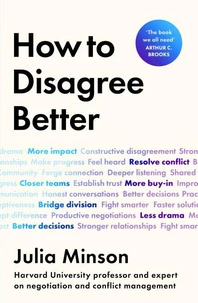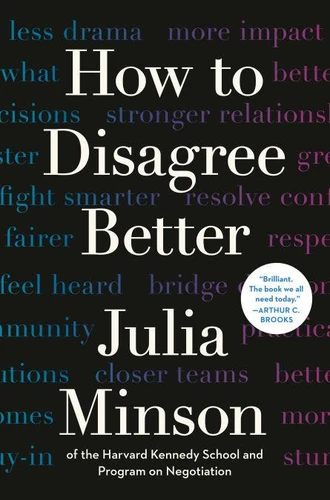
How to Disagree Better
Par :Formats :
Disponible dans votre compte client Decitre ou Furet du Nord dès validation de votre commande. Le format ePub protégé est :
- Compatible avec une lecture sur My Vivlio (smartphone, tablette, ordinateur)
- Compatible avec une lecture sur liseuses Vivlio
- Pour les liseuses autres que Vivlio, vous devez utiliser le logiciel Adobe Digital Edition. Non compatible avec la lecture sur les liseuses Kindle, Remarkable et Sony
- Non compatible avec un achat hors France métropolitaine
 , qui est-ce ?
Notre partenaire de plateforme de lecture numérique où vous retrouverez l'ensemble de vos ebooks gratuitement
Pour en savoir plus sur nos ebooks, consultez notre aide en ligne ici
C'est si simple ! Lisez votre ebook avec l'app Vivlio sur votre tablette, mobile ou ordinateur :

- Nombre de pages304
- FormatePub
- ISBN978-0-593-85502-7
- EAN9780593855027
- Date de parution24/03/2026
- Protection num.Adobe DRM
- Taille2 Mo
- Infos supplémentairesepub
- ÉditeurAvery
Résumé
NATIONAL BESTSELLERIn this "brilliant" (Arthur Brooks) and "both timely and timeless" (Adam Grant) book, pioneering Harvard Kennedy School professor and behavioral scientist Julia Minson reveals the counterintuitive secret to a life of less drama and more impact. We are in a disagreement crisis. The average person would rather go to the dentist than have a twenty-minute conversation with someone that they strongly disagree with.
Yet disagreement is both inevitable and essential for everything from navigating decisions at home to running innovative and agile companies to governing democratic societies. In How to Disagree Better, Minson brings to bear her decades of research into understanding the psychology of disagreement and its relevance to negotiations, conflict resolution, and decision-making, revealing the hidden skill that all the best mediators and negotiators share: displaying receptiveness to opposing views.
The science shows that receptive individuals don't just fight less, they also get more done-they are better decision-makers, better peacemakers, and yes, better influencers than the rest of us. Through original research and case studies, How to Disagree Better will show you why traditional persuasion strategies don't work as well as you think they do, how you can bridge division and reach better outcomes simply by utilizing receptiveness strategies, and that disagreeing better is a skill all of us can learn to apply at home, at work, and with our neighbors.
Yet disagreement is both inevitable and essential for everything from navigating decisions at home to running innovative and agile companies to governing democratic societies. In How to Disagree Better, Minson brings to bear her decades of research into understanding the psychology of disagreement and its relevance to negotiations, conflict resolution, and decision-making, revealing the hidden skill that all the best mediators and negotiators share: displaying receptiveness to opposing views.
The science shows that receptive individuals don't just fight less, they also get more done-they are better decision-makers, better peacemakers, and yes, better influencers than the rest of us. Through original research and case studies, How to Disagree Better will show you why traditional persuasion strategies don't work as well as you think they do, how you can bridge division and reach better outcomes simply by utilizing receptiveness strategies, and that disagreeing better is a skill all of us can learn to apply at home, at work, and with our neighbors.