SOLDES
Jusqu'à -70% sur une sélection d'articles*

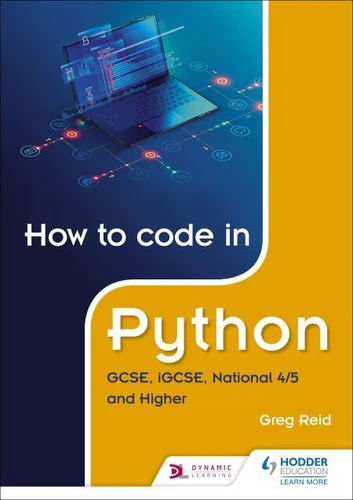
How to code in Python: GCSE, iGCSE, National 4/5 and Higher
Par :Formats :
Disponible dans votre compte client Decitre ou Furet du Nord dès validation de votre commande. Le format ePub protégé est :
- Compatible avec une lecture sur My Vivlio (smartphone, tablette, ordinateur)
- Compatible avec une lecture sur liseuses Vivlio
- Pour les liseuses autres que Vivlio, vous devez utiliser le logiciel Adobe Digital Edition. Non compatible avec la lecture sur les liseuses Kindle, Remarkable et Sony
- Non compatible avec un achat hors France métropolitaine
 , qui est-ce ?
Notre partenaire de plateforme de lecture numérique où vous retrouverez l'ensemble de vos ebooks gratuitement
Pour en savoir plus sur nos ebooks, consultez notre aide en ligne ici
C'est si simple ! Lisez votre ebook avec l'app Vivlio sur votre tablette, mobile ou ordinateur :

- Nombre de pages128
- FormatePub
- ISBN978-1-5104-6159-8
- EAN9781510461598
- Date de parution29/03/2020
- Protection num.Adobe DRM
- Infos supplémentairesepub
- ÉditeurHodder Education
Résumé
Ensure every student can become fluent in Python with this highly practical guide that will help them understand the theory and logic behind coding. Written for 14-16-year olds by a leading Python specialist and teacher, and aligned to curriculum requirements, this essential Student Book provides numerous practice questions and coding problems that can be completed as homework or during class - plus answers can be found online at www.hoddereducation.co.uk/pythonextrasHow to Code in Python will:> Provide hundreds of coding examples, puzzles and problem-solving tasks to strengthen computational thinking skills required for GCSE, iGCSE and National 4 / 5 success> Help students become proficient in computational thinking and problem-solving using Python> Provide easy-to-follow explanations of concepts and terminology> Feature plenty of opportunities for self-assessment with solutions to coding problems available onlineThis unique book can be broken down into three key features:> Code theory and explanations (worked examples) in a fun and accessible way> Computational thinking puzzles for the reader to solve; this will greatly improve students' ability to read code and predict its effect and output when run> Programming problems where the reader has to write a program to solve given scenariosGreg Reid is a very experienced Computer Science teacher in Scotland, who has written How to Pass Higher Computer Science and Higher Computing Science Practice Papers for Hodder Gibson.