This book is an intellectually humble account of my understanding of how municipalist communes may be built and sustained. It is divided into five parts. The first part develops a systematic framework for analysing hierarchical systems and introduces the ecological, philosophical, and political sensibilities necessary for understanding the chapters that follow. The second part outlines the municipalist framework of self-governance, examining the institutions and practices through which communes may organize themselves democratically.
The third part explores municipalist economics, including cooperative production, commons management, and economic democracy. Having established these foundations, the fourth part turns to praxis and discusses how municipalist communes may be built through prefigurative politics, study circles, affinity groups, dependency displacement, and communal design. The fifth and final part presents a selection of alternative institutions and a directory of existing communes and intentional communities that readers may study as real-world examples of experimentation and practice.
The book combines social ecology, communalism, municipalism, anarchist thought, and critical theory in an attempt to explore how freedom, democracy, and ecological sustainability may be brought together within a coherent social framework.
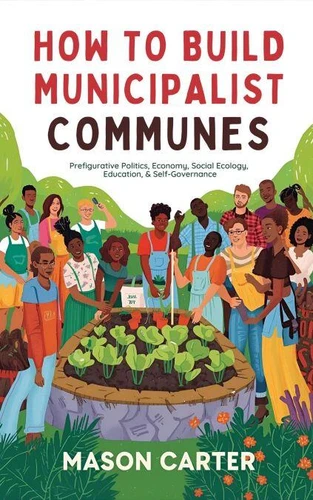
This book is an intellectually humble account of my understanding of how municipalist communes may be built and sustained. It is divided into five parts. The first part develops a systematic framework for analysing hierarchical systems and introduces the ecological, philosophical, and political sensibilities necessary for understanding the chapters that follow. The second part outlines the municipalist framework of self-governance, examining the institutions and practices through which communes may organize themselves democratically.
The third part explores municipalist economics, including cooperative production, commons management, and economic democracy. Having established these foundations, the fourth part turns to praxis and discusses how municipalist communes may be built through prefigurative politics, study circles, affinity groups, dependency displacement, and communal design. The fifth and final part presents a selection of alternative institutions and a directory of existing communes and intentional communities that readers may study as real-world examples of experimentation and practice.
The book combines social ecology, communalism, municipalism, anarchist thought, and critical theory in an attempt to explore how freedom, democracy, and ecological sustainability may be brought together within a coherent social framework.


 , qui est-ce ?