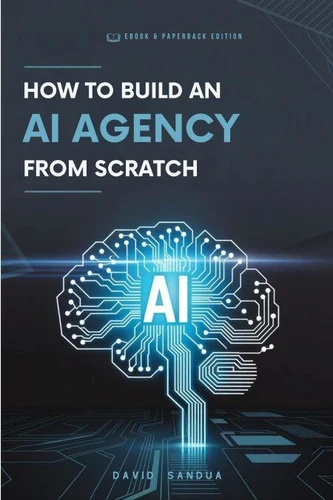
HOW TO CREATE AN AI AGENCY FROM SCRATCH is a practical and strategic guide for entrepreneurs who want to launch and scale an artificial intelligence agency with a realistic approach. The book takes you step by step through the entire process: from choosing a profitable niche and differentiating your value proposition, to designing your business model, setting prices, measuring results, and building a multidisciplinary team capable of delivering high-quality, rigorous projects.
With a clear tone and situational examples, the author shows how to structure tiered offerings, align metrics with client objectives, and convert case studies into commercial traction. He places special emphasis on marketing and acquisition: brand identity, educational content, webinars, and strategic alliances to gain credibility and qualified leads. The book also covers operational aspects: data governance, compliance (including GDPR), audits, and ethical design as a competitive advantage.
It also offers guidelines for anticipating regulatory and market changes. Finally, it provides criteria for training and growing the team (data scientists, engineers, PMs, and domain experts), fostering a culture of continuous learning, and remaining agile in the face of new tools and trends. In short, it is a comprehensive roadmap for moving from idea to measurable impact, with a focus on customer value and responsible scalability.
HOW TO CREATE AN AI AGENCY FROM SCRATCH is a practical and strategic guide for entrepreneurs who want to launch and scale an artificial intelligence agency with a realistic approach. The book takes you step by step through the entire process: from choosing a profitable niche and differentiating your value proposition, to designing your business model, setting prices, measuring results, and building a multidisciplinary team capable of delivering high-quality, rigorous projects.
With a clear tone and situational examples, the author shows how to structure tiered offerings, align metrics with client objectives, and convert case studies into commercial traction. He places special emphasis on marketing and acquisition: brand identity, educational content, webinars, and strategic alliances to gain credibility and qualified leads. The book also covers operational aspects: data governance, compliance (including GDPR), audits, and ethical design as a competitive advantage.
It also offers guidelines for anticipating regulatory and market changes. Finally, it provides criteria for training and growing the team (data scientists, engineers, PMs, and domain experts), fostering a culture of continuous learning, and remaining agile in the face of new tools and trends. In short, it is a comprehensive roadmap for moving from idea to measurable impact, with a focus on customer value and responsible scalability.

 , qui est-ce ?