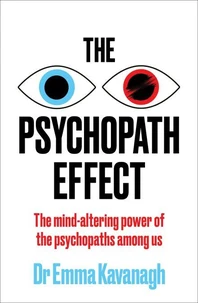
Dr Emma Kavanagh was born and raised in South Wales. She has a degree and PhD in psychology and, after leaving university, started her own business as a psychology consultant, specialising in human performance in extreme situations. For seven years she provided training and consultation for police forces and NATO and military personnel throughout the UK and Europe.
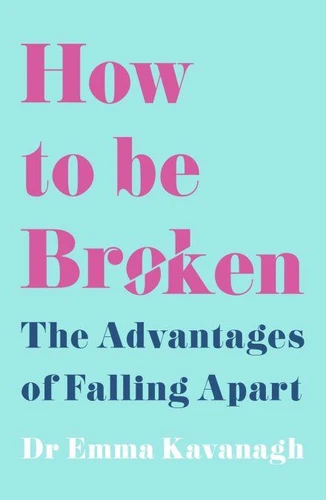
How to Be Broken. Sunday Times Best Self Help Book of 2021
Par :Formats :
Disponible dans votre compte client Decitre ou Furet du Nord dès validation de votre commande. Le format ePub protégé est :
- Compatible avec une lecture sur My Vivlio (smartphone, tablette, ordinateur)
- Compatible avec une lecture sur liseuses Vivlio
- Pour les liseuses autres que Vivlio, vous devez utiliser le logiciel Adobe Digital Edition. Non compatible avec la lecture sur les liseuses Kindle, Remarkable et Sony
- Non compatible avec un achat hors France métropolitaine
 , qui est-ce ?
Notre partenaire de plateforme de lecture numérique où vous retrouverez l'ensemble de vos ebooks gratuitement
Pour en savoir plus sur nos ebooks, consultez notre aide en ligne ici
C'est si simple ! Lisez votre ebook avec l'app Vivlio sur votre tablette, mobile ou ordinateur :

- Nombre de pages320
- FormatePub
- ISBN978-1-3987-0718-4
- EAN9781398707184
- Date de parution13/05/2021
- Protection num.Adobe DRM
- Infos supplémentairesepub
- ÉditeurOrion Spring
Résumé
'This is the book for right now. This is the book for understanding burnout and then kick-starting the rebuild.' Professor Lucy Easthope'If you are coming to the end of this year feeling battered and bruised, please read this hugely consoling short book.' Sunday TimesWe are all broken at one time or another. All of us fall apart. But it is possible to take those pieces and rebuild into a stronger version of ourselves.
Psychologist, Dr Emma Kavanagh, takes us on a tour through the psychological literature, looking at what neuroscience tells us about extreme stress. Using neuroscientific data, Dr Kavanagh has assessed the psychological literature that surrounds extreme stress. How to be broken looks beyond the fight or flight response to the science of group bonding in a crisis, it looks at how burnout might be better considered as a psychological adaptation to an unbearably tough environment.
And it looks at what comes next, after the falling apart, exploring the science behind adaptation to harsh environments and how, sometimes, the world falling apart can lead us to rebuild, better than before. As featured in the Independent, the Telegraph, the Observer, CNN and the Times, Dr Emma Kavanagh is giving us the tools to grow beyond a trauma. And how to put ourselves back together when we need it most.
Psychologist, Dr Emma Kavanagh, takes us on a tour through the psychological literature, looking at what neuroscience tells us about extreme stress. Using neuroscientific data, Dr Kavanagh has assessed the psychological literature that surrounds extreme stress. How to be broken looks beyond the fight or flight response to the science of group bonding in a crisis, it looks at how burnout might be better considered as a psychological adaptation to an unbearably tough environment.
And it looks at what comes next, after the falling apart, exploring the science behind adaptation to harsh environments and how, sometimes, the world falling apart can lead us to rebuild, better than before. As featured in the Independent, the Telegraph, the Observer, CNN and the Times, Dr Emma Kavanagh is giving us the tools to grow beyond a trauma. And how to put ourselves back together when we need it most.