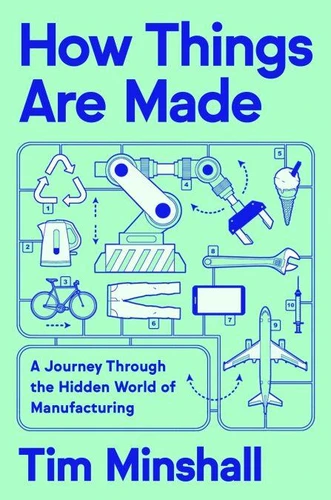
LONGLISTED AS A FINANCIAL TIMES AND SCHRODERS BUSINESS BOOK OF THE YEAR AWARDSHORTLISTED FOR THE ROYAL SOCIETY TRIVEDI SCIENCE BOOK PRIZEAn illuminating tour through the world of manufacturing and its seismic influence on our lives, from internationally renowned expert Tim MinshallWe live in a manufactured world. Unless you are floating naked through space, you are right now in direct contact with multiple manufactured products, including furniture, technology, clothing, and even food.
And yet the processes by which these things appear in our lives are virtually invisible. How often do we stop to think: Where do the things we buy actually come from? How are they made, and how do they make their way into our hands?The answers can be found in How Things Are Made, which traces the surprising paths taken by everyday items to reach consumers, from design to creation to delivery. Innovation expert Tim Minshall takes us on a journey through the manufacturing world, from the smallest job shops to mega-factories, from global shipping hubs and the complex logistics of local delivery to your door, revealing the inner workings of the system that runs 24-7-365 to make and deliver the things we need-or want-to live our daily lives, including cars, cakes, phones, planes, drugs, and medical devices.
Along the way, he explores how we can improve the fragility of our global manufacturing system and the impact it has on the natural world, presenting a path to a truly sustainable future. Brimming with energy and lively examples, How Things Are Made maps the awe-inspiring global system of manufacturing that enables virtually every aspect of our existence. By making sense of this surprising and hidden world, we gain the insights to improve supply chain resilience and make better choices for ourselves, our communities, and the planet.
This illuminating tour of the modern supply chain reveals: Globalization's True Cost: The surprising fragility of the global systems we depend on for everything from phones to prescription drugs, and how the pandemic exposed the cracks. Inside the Factory: A journey from the smallest job shops to mega-factories that reveals the fascinating inner workings of modern production. A Sustainable Future: How innovations in manufacturing are creating a path toward zero waste and a more sustainable planet for us all.
Technological Innovation: From the Industrial Revolution to modern automation, an expert's look at how technology has shaped-and will continue to shape-the world of making things.
LONGLISTED AS A FINANCIAL TIMES AND SCHRODERS BUSINESS BOOK OF THE YEAR AWARDSHORTLISTED FOR THE ROYAL SOCIETY TRIVEDI SCIENCE BOOK PRIZEAn illuminating tour through the world of manufacturing and its seismic influence on our lives, from internationally renowned expert Tim MinshallWe live in a manufactured world. Unless you are floating naked through space, you are right now in direct contact with multiple manufactured products, including furniture, technology, clothing, and even food.
And yet the processes by which these things appear in our lives are virtually invisible. How often do we stop to think: Where do the things we buy actually come from? How are they made, and how do they make their way into our hands?The answers can be found in How Things Are Made, which traces the surprising paths taken by everyday items to reach consumers, from design to creation to delivery. Innovation expert Tim Minshall takes us on a journey through the manufacturing world, from the smallest job shops to mega-factories, from global shipping hubs and the complex logistics of local delivery to your door, revealing the inner workings of the system that runs 24-7-365 to make and deliver the things we need-or want-to live our daily lives, including cars, cakes, phones, planes, drugs, and medical devices.
Along the way, he explores how we can improve the fragility of our global manufacturing system and the impact it has on the natural world, presenting a path to a truly sustainable future. Brimming with energy and lively examples, How Things Are Made maps the awe-inspiring global system of manufacturing that enables virtually every aspect of our existence. By making sense of this surprising and hidden world, we gain the insights to improve supply chain resilience and make better choices for ourselves, our communities, and the planet.
This illuminating tour of the modern supply chain reveals: Globalization's True Cost: The surprising fragility of the global systems we depend on for everything from phones to prescription drugs, and how the pandemic exposed the cracks. Inside the Factory: A journey from the smallest job shops to mega-factories that reveals the fascinating inner workings of modern production. A Sustainable Future: How innovations in manufacturing are creating a path toward zero waste and a more sustainable planet for us all.
Technological Innovation: From the Industrial Revolution to modern automation, an expert's look at how technology has shaped-and will continue to shape-the world of making things.