
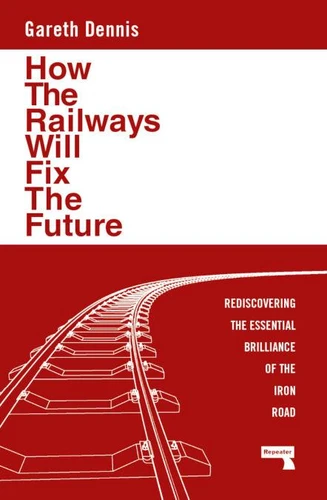
How the Railways Will Fix the Future. Rediscovering the Essential Brilliance of the Iron Road
Par :Formats :
Disponible dans votre compte client Decitre ou Furet du Nord dès validation de votre commande. Le format ePub protégé est :
- Compatible avec une lecture sur My Vivlio (smartphone, tablette, ordinateur)
- Compatible avec une lecture sur liseuses Vivlio
- Pour les liseuses autres que Vivlio, vous devez utiliser le logiciel Adobe Digital Edition. Non compatible avec la lecture sur les liseuses Kindle, Remarkable et Sony
- Non compatible avec un achat hors France métropolitaine
 , qui est-ce ?
Notre partenaire de plateforme de lecture numérique où vous retrouverez l'ensemble de vos ebooks gratuitement
Pour en savoir plus sur nos ebooks, consultez notre aide en ligne ici
C'est si simple ! Lisez votre ebook avec l'app Vivlio sur votre tablette, mobile ou ordinateur :

- Nombre de pages288
- FormatePub
- ISBN978-1-915672-50-6
- EAN9781915672506
- Date de parution12/11/2024
- Protection num.Adobe DRM
- Taille2 Mo
- Infos supplémentairesepub
- ÉditeurRepeater
Résumé
Railway engineer and transport policy specialist Gareth Dennis shows why the railways are key to the fight for a better world for us all. The world's railways were almost entirely created by capital and empire for extraction and exploitation, so what right do they have to exist and how can they be harnessed for good? Railway engineer and writer Gareth Dennis builds a case not simply for railways as a common good, but argues that railways are a critical tool for humanity to survive and thrive.
Whether it's the power of organised labour, the threats and opportunities of new technology, the distribution of democratic power or the calamitous impacts of climate change, railways can act as a lens through which to understand the future and the part they can play in it. Dennis takes us across the globe, from Virgin Hyperloop's abandoned test track in the Nevada desert to the overcrowded stations of the North of England, exploring how railways can shape and inform choices about our future, and in turn detailing how taking a long-term view can help shape transport for the better.
With his deep knowledge of railways and his unique view of history and politics, he equips us with the tools to answer those imperative questions: what and who should our railways be for?
Whether it's the power of organised labour, the threats and opportunities of new technology, the distribution of democratic power or the calamitous impacts of climate change, railways can act as a lens through which to understand the future and the part they can play in it. Dennis takes us across the globe, from Virgin Hyperloop's abandoned test track in the Nevada desert to the overcrowded stations of the North of England, exploring how railways can shape and inform choices about our future, and in turn detailing how taking a long-term view can help shape transport for the better.
With his deep knowledge of railways and his unique view of history and politics, he equips us with the tools to answer those imperative questions: what and who should our railways be for?