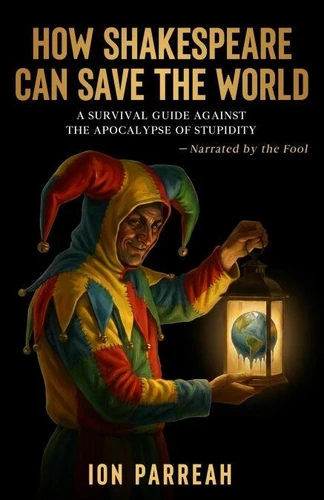
Fighting Fake News, Tribalism, and Doomscrolling with 400-Year-Old WisdomHow do you survive an age where truth is optional, outrage is currency, and stupidity has gone professional?You bring Shakespeare-wry, sharp, and unsparing. Narrated through the voice of King Lear's Fool, How Shakespeare Can Save the World reframes the Bard as a diagnostic weapon-deploying his wisdom to expose our era's most contagious disease: organized, weaponized stupidity.
With an unnervingly precise eye for human nature, Shakespeare throws a stage light on our modern plagues-algorithmic echo chambers, populist theatrics, climate inertia, and the quiet normalization of absurdity. Our crises aren't new; they're old plots, badly restaged. Here, Shakespeare becomes an X-ray, exposing the fractures beneath our modern certainties. His characters return as living archetypes of contemporary dysfunction:Macbeth, the overconfident disruptor;Lear, the leader who rejects truth;Iago, the architect of misinformation;Hamlet, paralyzed at the edge of collapse.
The 21st century isn't a brave new world-it's an old play in a shinier theatre, populated by power-drunk Macbeths, whispering Iagos, and Hamlets frozen at the edge of collapse. The Bard didn't just understand our madness-he armed us against it: with empathy, attention, imagination, and a spine that doesn't fold when truth goes out of fashion. And if we are to duel with mobilized stupidity-and duel we must-we'll want an ally who has read this script before.
Part satire, part cultural diagnosis, part philosophical argument, this book builds toward one heretical claim:The cure for our chaos isn't more data-it's wiser storytelling. Written from the front lines of global policy and power, this is not just a book about Shakespeare-it's a guide to navigating the stories shaping our world in real time. A sharp, timely critique of modern society-rooted in Shakespeare's enduring understanding of human folly.- Readers' Favorite, ?????Clever, sarcastic, and brutally honest.
an unsettling reflection of the world we live in.- NetGalley reviewer
Fighting Fake News, Tribalism, and Doomscrolling with 400-Year-Old WisdomHow do you survive an age where truth is optional, outrage is currency, and stupidity has gone professional?You bring Shakespeare-wry, sharp, and unsparing. Narrated through the voice of King Lear's Fool, How Shakespeare Can Save the World reframes the Bard as a diagnostic weapon-deploying his wisdom to expose our era's most contagious disease: organized, weaponized stupidity.
With an unnervingly precise eye for human nature, Shakespeare throws a stage light on our modern plagues-algorithmic echo chambers, populist theatrics, climate inertia, and the quiet normalization of absurdity. Our crises aren't new; they're old plots, badly restaged. Here, Shakespeare becomes an X-ray, exposing the fractures beneath our modern certainties. His characters return as living archetypes of contemporary dysfunction:Macbeth, the overconfident disruptor;Lear, the leader who rejects truth;Iago, the architect of misinformation;Hamlet, paralyzed at the edge of collapse.
The 21st century isn't a brave new world-it's an old play in a shinier theatre, populated by power-drunk Macbeths, whispering Iagos, and Hamlets frozen at the edge of collapse. The Bard didn't just understand our madness-he armed us against it: with empathy, attention, imagination, and a spine that doesn't fold when truth goes out of fashion. And if we are to duel with mobilized stupidity-and duel we must-we'll want an ally who has read this script before.
Part satire, part cultural diagnosis, part philosophical argument, this book builds toward one heretical claim:The cure for our chaos isn't more data-it's wiser storytelling. Written from the front lines of global policy and power, this is not just a book about Shakespeare-it's a guide to navigating the stories shaping our world in real time. A sharp, timely critique of modern society-rooted in Shakespeare's enduring understanding of human folly.- Readers' Favorite, ?????Clever, sarcastic, and brutally honest.
an unsettling reflection of the world we live in.- NetGalley reviewer

 , qui est-ce ?