SOLDES
Jusqu'à -70% sur une sélection d'articles*

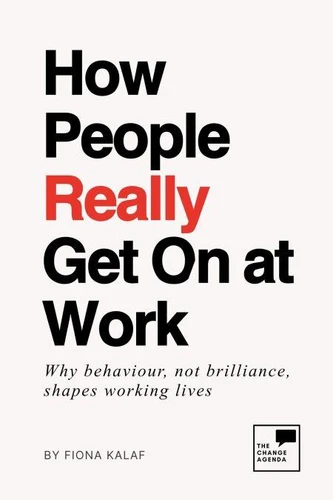
How People Really Get On at Work
Par :Formats :
Disponible dans votre compte client Decitre ou Furet du Nord dès validation de votre commande. Le format ePub est :
- Compatible avec une lecture sur My Vivlio (smartphone, tablette, ordinateur)
- Compatible avec une lecture sur liseuses Vivlio
- Pour les liseuses autres que Vivlio, vous devez utiliser le logiciel Adobe Digital Edition. Non compatible avec la lecture sur les liseuses Kindle, Remarkable et Sony
 , qui est-ce ?
Notre partenaire de plateforme de lecture numérique où vous retrouverez l'ensemble de vos ebooks gratuitement
Pour en savoir plus sur nos ebooks, consultez notre aide en ligne ici
C'est si simple ! Lisez votre ebook avec l'app Vivlio sur votre tablette, mobile ou ordinateur :

- FormatePub
- ISBN978-1-7644684-8-0
- EAN9781764468480
- Date de parution05/01/2026
- Protection num.pas de protection
- Infos supplémentairesepub
- ÉditeurThe Change Agenda
Résumé
Careers rarely advance for the reasons we expect. Technical skill matters. Intelligence matters. Hard work matters. Yet across organisations and industries, these qualities alone do not explain who is trusted, who is influential or who progresses over time. In How People Really Get On at Work, Fiona Kalaf examines the quieter forces that shape working lives: behaviour, judgement and conduct. Drawing on long observation of professional environments, she explores how small, repeated actions - often overlooked or dismissed - accumulate into reputation, influence and opportunity.
This is not a book of tips or techniques. It does not offer formulas, frameworks or shortcuts. Instead, it names the unspoken curriculum of work: how people are read, how trust is built or eroded, and how standards are set through everyday behaviour. From discretion and candour to emotional control, presence and generosity, the chapters consider what experienced professionals notice - and quietly reward - long before anything is formalised.
Written for thoughtful readers navigating complex organisations, this book offers clarity without cynicism and guidance without instruction. It is for those who want to understand not just how to perform at work, but how to conduct themselves within it.
This is not a book of tips or techniques. It does not offer formulas, frameworks or shortcuts. Instead, it names the unspoken curriculum of work: how people are read, how trust is built or eroded, and how standards are set through everyday behaviour. From discretion and candour to emotional control, presence and generosity, the chapters consider what experienced professionals notice - and quietly reward - long before anything is formalised.
Written for thoughtful readers navigating complex organisations, this book offers clarity without cynicism and guidance without instruction. It is for those who want to understand not just how to perform at work, but how to conduct themselves within it.