SOLDES
Jusqu'à -70% sur une sélection d'articles*

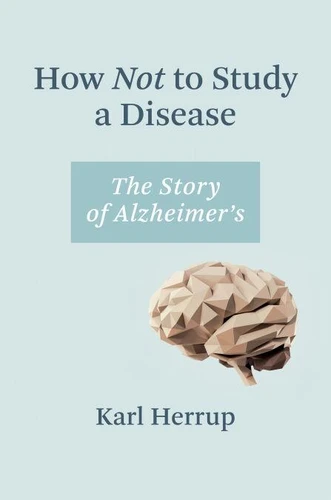
How Not to Study a Disease. The Story of Alzheimer's
Par :Formats :
Disponible dans votre compte client Decitre ou Furet du Nord dès validation de votre commande. Le format ePub protégé est :
- Compatible avec une lecture sur My Vivlio (smartphone, tablette, ordinateur)
- Compatible avec une lecture sur liseuses Vivlio
- Pour les liseuses autres que Vivlio, vous devez utiliser le logiciel Adobe Digital Edition. Non compatible avec la lecture sur les liseuses Kindle, Remarkable et Sony
- Non compatible avec un achat hors France métropolitaine
 , qui est-ce ?
Notre partenaire de plateforme de lecture numérique où vous retrouverez l'ensemble de vos ebooks gratuitement
Pour en savoir plus sur nos ebooks, consultez notre aide en ligne ici
C'est si simple ! Lisez votre ebook avec l'app Vivlio sur votre tablette, mobile ou ordinateur :

- Nombre de pages272
- FormatePub
- ISBN978-0-262-36575-8
- EAN9780262365758
- Date de parution05/10/2021
- Protection num.Adobe DRM
- Taille15 Mo
- Infos supplémentairesepub
- ÉditeurThe MIT Press
Résumé
INSIDE ALZHEIMER'S RESEARCH: An authority on Alzheimer's offers a history of past failures and a roadmap that points us in a new direction in our journey to a cure. Includes personal and powerful stories of physicians, biologists, and Alzheimer's patients and their families. For decades, some of our best and brightest medical scientists have dedicated themselves to finding a cure for Alzheimer's disease.
What happened? Where is the cure? The biggest breakthroughs occurred 25 years ago, with little progress since. In How Not to Study a Disease, neurobiologist Karl Herrup explains why the Alzheimer's discoveries of the 1990s didn't bear fruit and maps a direction for future research. Herrup describes the research, explains what's taking so long, and offers an approach for resetting future research. Herrup offers a unique insider'' perspective, describing the red flags that science ignored in the rush to find a cure.
He is unsparing in calling out the stubbornness, greed, and bad advice that has hamstrung the field, but his final message is a largely optimistic one. Herrup presents a new and sweeping vision of the field that includes a redefinition of the disease and a fresh conceptualization of aging and dementia that asks us to imagine the brain as a series of interconnected "neighborhoods." He calls for changes in virtually every aspect of the Alzheimer's disease research effort, from the drug development process, to the mechanisms of support for basic research, to the often-overlooked role of the scientific media, and more.
With How Not to Study a Disease, Herrup provides a roadmap that points us in a new direction in our journey to a cure for Alzheimer's.
What happened? Where is the cure? The biggest breakthroughs occurred 25 years ago, with little progress since. In How Not to Study a Disease, neurobiologist Karl Herrup explains why the Alzheimer's discoveries of the 1990s didn't bear fruit and maps a direction for future research. Herrup describes the research, explains what's taking so long, and offers an approach for resetting future research. Herrup offers a unique insider'' perspective, describing the red flags that science ignored in the rush to find a cure.
He is unsparing in calling out the stubbornness, greed, and bad advice that has hamstrung the field, but his final message is a largely optimistic one. Herrup presents a new and sweeping vision of the field that includes a redefinition of the disease and a fresh conceptualization of aging and dementia that asks us to imagine the brain as a series of interconnected "neighborhoods." He calls for changes in virtually every aspect of the Alzheimer's disease research effort, from the drug development process, to the mechanisms of support for basic research, to the often-overlooked role of the scientific media, and more.
With How Not to Study a Disease, Herrup provides a roadmap that points us in a new direction in our journey to a cure for Alzheimer's.