SOLDES
Jusqu'à -70% sur une sélection d'articles*

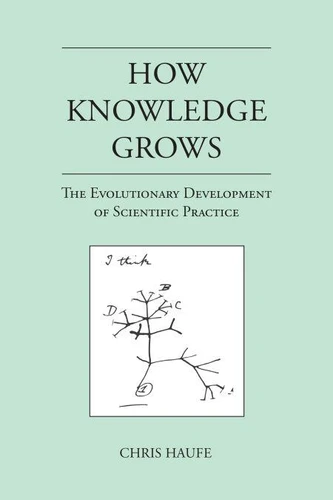
How Knowledge Grows. The Evolutionary Development of Scientific Practice
Par :Formats :
Disponible dans votre compte client Decitre ou Furet du Nord dès validation de votre commande. Le format ePub protégé est :
- Compatible avec une lecture sur My Vivlio (smartphone, tablette, ordinateur)
- Compatible avec une lecture sur liseuses Vivlio
- Pour les liseuses autres que Vivlio, vous devez utiliser le logiciel Adobe Digital Edition. Non compatible avec la lecture sur les liseuses Kindle, Remarkable et Sony
- Non compatible avec un achat hors France métropolitaine
 , qui est-ce ?
Notre partenaire de plateforme de lecture numérique où vous retrouverez l'ensemble de vos ebooks gratuitement
Pour en savoir plus sur nos ebooks, consultez notre aide en ligne ici
C'est si simple ! Lisez votre ebook avec l'app Vivlio sur votre tablette, mobile ou ordinateur :

- Nombre de pages352
- FormatePub
- ISBN978-0-262-37160-5
- EAN9780262371605
- Date de parution01/11/2022
- Protection num.Adobe DRM
- Taille6 Mo
- Infos supplémentairesepub
- ÉditeurThe MIT Press
Résumé
An argument that the development of scientific practice and growth of scientific knowledge are governed by Darwin's evolutionary model of descent with modification. Although scientific investigation is influenced by our cognitive and moral failings as well as all of the factors impinging on human life, the historical development of scientific knowledge has trended toward an increasingly accurate picture of an increasing number of phenomena.
Taking a fresh look at Thomas Kuhn's 1962 work, The Structure of Scientific Revolutions, in How Knowledge Grows Chris Haufe uses evolutionary theory to explain both why scientific practice develops the way it does and how scientific knowledge expands. This evolutionary model, claims Haufe, helps to explain what is epistemically special about scientific knowledge: its tendency to grow in both depth and breadth.
Kuhn showed how intellectual communities achieve consensus in part by discriminating against ideas that differ from their own and isolating themselves intellectually from other fields of inquiry and broader social concerns. These same characteristics, says Haufe, determine a biological population's degree of susceptibility to modification by natural selection. He argues that scientific knowledge grows, even across generations of variable groups of scientists, precisely because its development is governed by Darwinian evolution.
Indeed, he supports the claim that this susceptibility to modification through natural selection helps to explain the epistemic power of certain branches of modern science. In updating and expanding the evolutionary approach to scientific knowledge, Haufe provides a model for thinking about science that acknowledges the historical contingency of scientific thought while showing why we nevertheless should trust the results of scientific research when it is the product of certain kinds of scientific communities.
Taking a fresh look at Thomas Kuhn's 1962 work, The Structure of Scientific Revolutions, in How Knowledge Grows Chris Haufe uses evolutionary theory to explain both why scientific practice develops the way it does and how scientific knowledge expands. This evolutionary model, claims Haufe, helps to explain what is epistemically special about scientific knowledge: its tendency to grow in both depth and breadth.
Kuhn showed how intellectual communities achieve consensus in part by discriminating against ideas that differ from their own and isolating themselves intellectually from other fields of inquiry and broader social concerns. These same characteristics, says Haufe, determine a biological population's degree of susceptibility to modification by natural selection. He argues that scientific knowledge grows, even across generations of variable groups of scientists, precisely because its development is governed by Darwinian evolution.
Indeed, he supports the claim that this susceptibility to modification through natural selection helps to explain the epistemic power of certain branches of modern science. In updating and expanding the evolutionary approach to scientific knowledge, Haufe provides a model for thinking about science that acknowledges the historical contingency of scientific thought while showing why we nevertheless should trust the results of scientific research when it is the product of certain kinds of scientific communities.