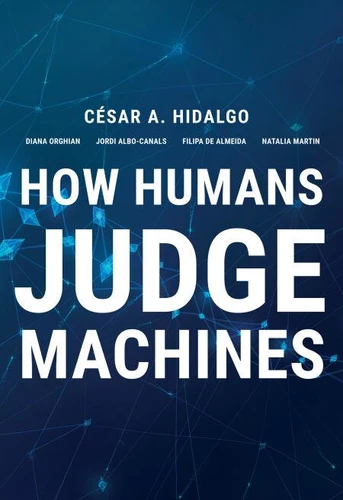
Explore how we judge humans and machines differently, depending on the scenario-from losing your job to AI to the failure of a natural disaster alert system. How would you feel about losing your job to a machine? How about a tsunami alert system that fails? Would you react differently to acts of discrimination depending on whether they were carried out by a machine or by a human? What about public surveillance?How Humans Judge Machines compares people's reactions to actions performed by humans and machines.
Using data collected in dozens of experiments, this book reveals the biases that permeate human-machine interactions. Are there conditions in which we judge machines unfairly? Is our judgment of machines affected by the moral dimensions of a scenario? Is our judgment of machine correlated with demographic factors such as education or gender?César Hidalgo and colleagues use hard science to take on these pressing technological questions.
Using randomized experiments, they create revealing counterfactuals and build statistical models to explain how people judge artificial intelligence and whether they do it fairly. Through original research, How Humans Judge Machines bring us one step closer to understanding the ethical consequences of AI.
Explore how we judge humans and machines differently, depending on the scenario-from losing your job to AI to the failure of a natural disaster alert system. How would you feel about losing your job to a machine? How about a tsunami alert system that fails? Would you react differently to acts of discrimination depending on whether they were carried out by a machine or by a human? What about public surveillance?How Humans Judge Machines compares people's reactions to actions performed by humans and machines.
Using data collected in dozens of experiments, this book reveals the biases that permeate human-machine interactions. Are there conditions in which we judge machines unfairly? Is our judgment of machines affected by the moral dimensions of a scenario? Is our judgment of machine correlated with demographic factors such as education or gender?César Hidalgo and colleagues use hard science to take on these pressing technological questions.
Using randomized experiments, they create revealing counterfactuals and build statistical models to explain how people judge artificial intelligence and whether they do it fairly. Through original research, How Humans Judge Machines bring us one step closer to understanding the ethical consequences of AI.

 , qui est-ce ?
