SOLDES
Jusqu'à -70% sur une sélection d'articles*

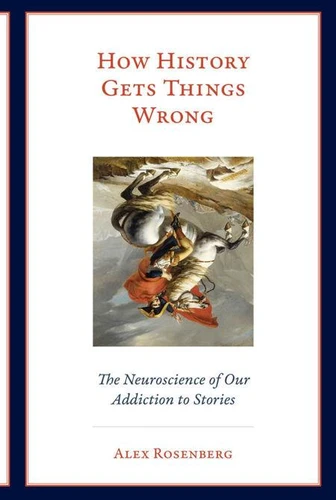
How History Gets Things Wrong. The Neuroscience of Our Addiction to Stories
Par :Formats :
Disponible dans votre compte client Decitre ou Furet du Nord dès validation de votre commande. Le format ePub protégé est :
- Compatible avec une lecture sur My Vivlio (smartphone, tablette, ordinateur)
- Compatible avec une lecture sur liseuses Vivlio
- Pour les liseuses autres que Vivlio, vous devez utiliser le logiciel Adobe Digital Edition. Non compatible avec la lecture sur les liseuses Kindle, Remarkable et Sony
- Non compatible avec un achat hors France métropolitaine
 , qui est-ce ?
Notre partenaire de plateforme de lecture numérique où vous retrouverez l'ensemble de vos ebooks gratuitement
Pour en savoir plus sur nos ebooks, consultez notre aide en ligne ici
C'est si simple ! Lisez votre ebook avec l'app Vivlio sur votre tablette, mobile ou ordinateur :

- Nombre de pages296
- FormatePub
- ISBN978-0-262-34842-3
- EAN9780262348423
- Date de parution09/10/2018
- Protection num.Adobe DRM
- Taille14 Mo
- Infos supplémentairesepub
- ÉditeurThe MIT Press
Résumé
Why we learn the wrong things from narrative history, and how our love for stories is hard-wired. To understand something, you need to know its history. Right? Wrong, says Alex Rosenberg in How History Gets Things Wrong. Feeling especially well-informed after reading a book of popular history on the best-seller list? Don't. Narrative history is always, always wrong. It's not just incomplete or inaccurate but deeply wrong, as wrong as Ptolemaic astronomy.
We no longer believe that the earth is the center of the universe. Why do we still believe in historical narrative? Our attachment to history as a vehicle for understanding has a long Darwinian pedigree and a genetic basis. Our love of stories is hard-wired. Neuroscience reveals that human evolution shaped a tool useful for survival into a defective theory of human nature. Stories historians tell, Rosenberg continues, are not only wrong but harmful.
Israel and Palestine, for example, have dueling narratives of dispossession that prevent one side from compromising with the other. Henry Kissinger applied lessons drawn from the Congress of Vienna to American foreign policy with disastrous results. Human evolution improved primate mind reading-the ability to anticipate the behavior of others, whether predators, prey, or cooperators-to get us to the top of the African food chain.
Now, however, this hard-wired capacity makes us think we can understand history-what the Kaiser was thinking in 1914, why Hitler declared war on the United States-by uncovering the narratives of what happened and why. In fact, Rosenberg argues, we will only understand history if we don't make it into a story.
We no longer believe that the earth is the center of the universe. Why do we still believe in historical narrative? Our attachment to history as a vehicle for understanding has a long Darwinian pedigree and a genetic basis. Our love of stories is hard-wired. Neuroscience reveals that human evolution shaped a tool useful for survival into a defective theory of human nature. Stories historians tell, Rosenberg continues, are not only wrong but harmful.
Israel and Palestine, for example, have dueling narratives of dispossession that prevent one side from compromising with the other. Henry Kissinger applied lessons drawn from the Congress of Vienna to American foreign policy with disastrous results. Human evolution improved primate mind reading-the ability to anticipate the behavior of others, whether predators, prey, or cooperators-to get us to the top of the African food chain.
Now, however, this hard-wired capacity makes us think we can understand history-what the Kaiser was thinking in 1914, why Hitler declared war on the United States-by uncovering the narratives of what happened and why. In fact, Rosenberg argues, we will only understand history if we don't make it into a story.