
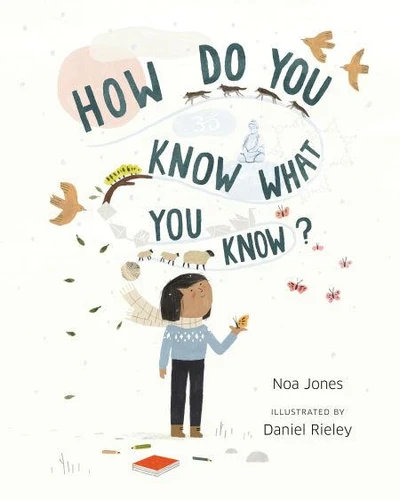
How Do You Know What You Know?
Par : ,Formats :
Disponible dans votre compte client Decitre ou Furet du Nord dès validation de votre commande. Le format Epub fixed layout protégé est :
- Compatible avec une lecture sur My Vivlio (smartphone, tablette, ordinateur)
- Compatible avec une lecture sur liseuses Vivlio
- Pour les liseuses autres que Vivlio, vous devez utiliser le logiciel Adobe Digital Edition. Non compatible avec la lecture sur les liseuses Kindle, Remarkable et Sony
- Non compatible avec un achat hors France métropolitaine
 , qui est-ce ?
Notre partenaire de plateforme de lecture numérique où vous retrouverez l'ensemble de vos ebooks gratuitement
Pour en savoir plus sur nos ebooks, consultez notre aide en ligne ici
C'est si simple ! Lisez votre ebook avec l'app Vivlio sur votre tablette, mobile ou ordinateur :

- Nombre de pages32
- FormatEpub fixed layout
- ISBN978-0-8348-4525-1
- EAN9780834845251
- Date de parution03/10/2023
- Protection num.Adobe DRM
- Taille10 Mo
- Infos supplémentairesepub
- ÉditeurBala Kids
Résumé
2024 NAPPA Award winnerA charming and inquisitive story that celebrates tracing the origin of ideas, language, and every day objects, for children 4-8. Where does snow come from? What language did the word thermos come from? And who was the Buddha's teacher?So many problems in the world come from accepting information at face value without looking into where it comes from. How Do You Know What You Know? follows a child and their father on a cozy, snowy day outing.
The child asks questions about how things came to be the way they are. The questions range from how the father knows how to tie a shoe to why it's not a good idea to eat yellow snow. These queries are met by the father with patience and humor that weave a delightful narrative of intergenerational knowledge sharing. In this exchange, respectful inquiry is beautifully modeled for young learners. The journey includes an amble in the park, a trip to the library, a bus ride, and a visit to a local Buddhist temple where the father is a student.
The teacher there introduces the child to the idea of lineage, that wisdom and understanding comes from generations of knowledge passed down from person to person. With a quaint and welcoming simplicity, the illustrations bring this beautiful story to life, and every spread has a subtle nod to the progression of how things come to be the way they are. The story encourages children's natural curiosity and shows them that everywhere they look there is a story to be told if we just ask.
The child asks questions about how things came to be the way they are. The questions range from how the father knows how to tie a shoe to why it's not a good idea to eat yellow snow. These queries are met by the father with patience and humor that weave a delightful narrative of intergenerational knowledge sharing. In this exchange, respectful inquiry is beautifully modeled for young learners. The journey includes an amble in the park, a trip to the library, a bus ride, and a visit to a local Buddhist temple where the father is a student.
The teacher there introduces the child to the idea of lineage, that wisdom and understanding comes from generations of knowledge passed down from person to person. With a quaint and welcoming simplicity, the illustrations bring this beautiful story to life, and every spread has a subtle nod to the progression of how things come to be the way they are. The story encourages children's natural curiosity and shows them that everywhere they look there is a story to be told if we just ask.