SOLDES
Jusqu'à -70% sur une sélection d'articles*

Nouveauté
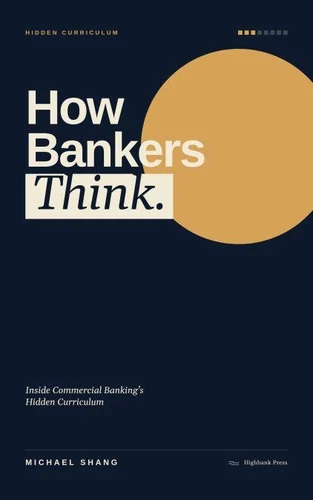
How Bankers Think: Inside Commercial Banking's Hidden Curriculum
Par :Formats :
Disponible dans votre compte client Decitre ou Furet du Nord dès validation de votre commande. Le format ePub est :
- Compatible avec une lecture sur My Vivlio (smartphone, tablette, ordinateur)
- Compatible avec une lecture sur liseuses Vivlio
- Pour les liseuses autres que Vivlio, vous devez utiliser le logiciel Adobe Digital Edition. Non compatible avec la lecture sur les liseuses Kindle, Remarkable et Sony
 , qui est-ce ?
Notre partenaire de plateforme de lecture numérique où vous retrouverez l'ensemble de vos ebooks gratuitement
Pour en savoir plus sur nos ebooks, consultez notre aide en ligne ici
C'est si simple ! Lisez votre ebook avec l'app Vivlio sur votre tablette, mobile ou ordinateur :

- FormatePub
- ISBN978-1-0672833-1-5
- EAN9781067283315
- Date de parution31/05/2026
- Protection num.pas de protection
- Infos supplémentairesepub
- ÉditeurHighbank Press
Résumé
You walked into the interview prepared. You knew the ratios. You had read the guides. And somewhere in the first ten minutes, you realised the senior banker across the table was not testing what you knew - she was testing how you thought. There is a curriculum the standard guides never cover. It is the layer beneath the technical content: the frameworks practising bankers actually use, the dispositions they listen for in the room, and the disciplines that produce careers of durable judgement across cycles.
No one writes it down, because the people who know it have spent fifteen or twenty years learning it the slow way. How Bankers Think names it. Drawing on fifteen years inside commercial banking, this book makes the implicit explicit - how credit decisions are really made, the signals that move a file from maybe to yes, how to read quality of earnings beneath the numbers, and how experienced bankers know when to walk away.
Twelve worked frameworks turn instinct into method. It is written for three readers: the analyst or relationship manager building judgement in their first decade; the student or career-changer weighing a future in banking; and the lawyer, auditor, or advisor who sits across the table and wants to read the room the way the bank does. Whatever side of the table you are on, this book shows you what is really being assessed - and why.
No one writes it down, because the people who know it have spent fifteen or twenty years learning it the slow way. How Bankers Think names it. Drawing on fifteen years inside commercial banking, this book makes the implicit explicit - how credit decisions are really made, the signals that move a file from maybe to yes, how to read quality of earnings beneath the numbers, and how experienced bankers know when to walk away.
Twelve worked frameworks turn instinct into method. It is written for three readers: the analyst or relationship manager building judgement in their first decade; the student or career-changer weighing a future in banking; and the lawyer, auditor, or advisor who sits across the table and wants to read the room the way the bank does. Whatever side of the table you are on, this book shows you what is really being assessed - and why.