SOLDES
Jusqu'à -70% sur une sélection d'articles*

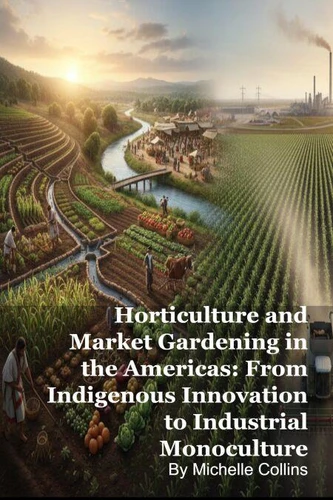
Horticulture and Market Gardening in the Americas: From Indigenous Innovation to Industrial Monoculture
Par :Formats :
Disponible dans votre compte client Decitre ou Furet du Nord dès validation de votre commande. Le format ePub est :
- Compatible avec une lecture sur My Vivlio (smartphone, tablette, ordinateur)
- Compatible avec une lecture sur liseuses Vivlio
- Pour les liseuses autres que Vivlio, vous devez utiliser le logiciel Adobe Digital Edition. Non compatible avec la lecture sur les liseuses Kindle, Remarkable et Sony
 , qui est-ce ?
Notre partenaire de plateforme de lecture numérique où vous retrouverez l'ensemble de vos ebooks gratuitement
Pour en savoir plus sur nos ebooks, consultez notre aide en ligne ici
C'est si simple ! Lisez votre ebook avec l'app Vivlio sur votre tablette, mobile ou ordinateur :

- FormatePub
- ISBN8233476600
- EAN9798233476600
- Date de parution02/01/2026
- Protection num.pas de protection
- Infos supplémentairesepub
- ÉditeurLinda Balsamo
Résumé
Horticulture and Market Gardening in the Americas: From Indigenous Innovation to Industrial MonocultureThis sweeping history examines twelve thousand years of horticultural development in the Americas, tracing the transformation from sophisticated indigenous agricultural systems to industrial monoculture. Beginning with terminal Pleistocene plant domestication and the independent development of agriculture in four distinct centers, the narrative follows indigenous peoples who created the Three Sisters polyculture, Amazonian terra preta, Andean terracing, and Aztec chinampas-agricultural marvels that sustained millions while maintaining ecological balance.
The book then documents how European colonization disrupted these systems through disease, forced labor, and the Columbian Exchange, before examining the rise of industrial agriculture through mechanization, chemical intensification, refrigerated transport, and exploitative labor systems built on successive waves of immigrant workers. Later chapters explore the genetic bottleneck created by hybrid seeds replacing thousands of heirloom varieties, the environmental costs of pesticide-dependent farming, the mechanization paradox that kept certain crops dependent on hand labor, and the emergence of the food sovereignty movement as resistance to corporate-controlled agriculture.
Drawing on agricultural history, indigenous studies, labor history, and environmental science, this work reveals how contemporary food systems emerged through technological change, colonial violence, and deliberate policy choices that concentrated power while externalizing costs onto workers, communities, and ecosystems.
The book then documents how European colonization disrupted these systems through disease, forced labor, and the Columbian Exchange, before examining the rise of industrial agriculture through mechanization, chemical intensification, refrigerated transport, and exploitative labor systems built on successive waves of immigrant workers. Later chapters explore the genetic bottleneck created by hybrid seeds replacing thousands of heirloom varieties, the environmental costs of pesticide-dependent farming, the mechanization paradox that kept certain crops dependent on hand labor, and the emergence of the food sovereignty movement as resistance to corporate-controlled agriculture.
Drawing on agricultural history, indigenous studies, labor history, and environmental science, this work reveals how contemporary food systems emerged through technological change, colonial violence, and deliberate policy choices that concentrated power while externalizing costs onto workers, communities, and ecosystems.