SOLDES
Jusqu'à -70% sur une sélection d'articles*

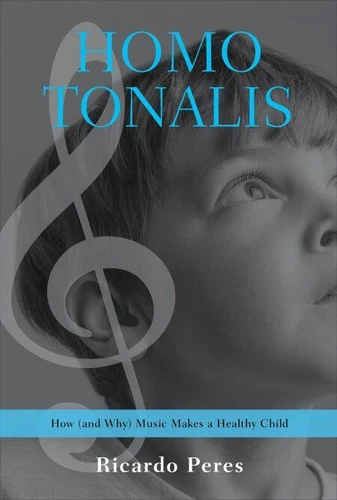
Homo Tonalis: How (and Why) Music Makes a Healthy Child
Par :Formats :
Disponible dans votre compte client Decitre ou Furet du Nord dès validation de votre commande. Le format ePub est :
- Compatible avec une lecture sur My Vivlio (smartphone, tablette, ordinateur)
- Compatible avec une lecture sur liseuses Vivlio
- Pour les liseuses autres que Vivlio, vous devez utiliser le logiciel Adobe Digital Edition. Non compatible avec la lecture sur les liseuses Kindle, Remarkable et Sony
 , qui est-ce ?
Notre partenaire de plateforme de lecture numérique où vous retrouverez l'ensemble de vos ebooks gratuitement
Pour en savoir plus sur nos ebooks, consultez notre aide en ligne ici
C'est si simple ! Lisez votre ebook avec l'app Vivlio sur votre tablette, mobile ou ordinateur :

- FormatePub
- ISBN8232490874
- EAN9798232490874
- Date de parution15/11/2025
- Protection num.pas de protection
- Infos supplémentairesepub
- ÉditeurDraft2Digital
Résumé
Music, despite being the first art and the first law of physics mastered by man, has not received due attention since ancient Greece, particularly with respect to the development and education of children as proposed by Plato in classical Athens. Keep in mind that the tones forming music scales originated from ratios of string segments in the 6th century BC at the hands of Pythagoras, who observed an inverse correlation between the length of a string and its vibration frequency.
That was how musical tones, intervals and scales came about, two hundred years before Plato. Music is both science and art. This statement can be confirmed in relation to physics, mathematics, geometry and biology, involving sensory, cognitive, emotional and social aspects. With respect to the statement above, it is worth considering the words of Max Planck, the father of quantum physics and also an accomplished classical pianist.
While discussing the relationship between science and art during an interview with The Observer on January 25, 1931, the reporter asked Planck if one was more important than the other, to which the physicist replied: "It is like asking me which is more important, the lock or the key." The purpose of this book is the redemption of music's proper status as the first art while unveiling opportunities to use music scientifically in the areas of health and education.
Two original theses are integrated into the framework of the book: Homo Tonalis and Spectrogrammatic Entrainment. Homo Tonalis explains the tonal roots and musical heritage of humans, embracing the musical brain model. The thesis explains that the homo Tonalis is born at 24 weeks of gestation, when the fetus begins to discern melodies, three months before the child is delivered. The thesis is grounded on the observation of neurological preferences and behaviors caused by tonal antecedence in utero which are naturally expressed after birth and remain until old age. Secondly, the discovery of rhythmic auditory-motor entrainment in clinical populations was a historical breakthrough in demonstrating a neurological mechanism linking music to retraining brain and behavioral functions (Thaut et al., 1998b).
Yet, little attention has been paid to spectral auditory-neural entrainment, implicit in the arresting nature of sound itself. The sound we hear is nothing other than the brain's electrical response to external acoustic stimuli. In this regard, the spectral content of music (harmony and timbre) is processed by the human brain at a fractal level (harmonics and inharmonics). This indicates ancestry beyond the reach of record, suggesting that the neural mechanisms operating the granular processing of music are intrinsic to the nature and growth of the brain.
In the final analysis, the spectrogrammatics of music is behind the powerful impact on brain function and genetic expression generally attributed to "music".
That was how musical tones, intervals and scales came about, two hundred years before Plato. Music is both science and art. This statement can be confirmed in relation to physics, mathematics, geometry and biology, involving sensory, cognitive, emotional and social aspects. With respect to the statement above, it is worth considering the words of Max Planck, the father of quantum physics and also an accomplished classical pianist.
While discussing the relationship between science and art during an interview with The Observer on January 25, 1931, the reporter asked Planck if one was more important than the other, to which the physicist replied: "It is like asking me which is more important, the lock or the key." The purpose of this book is the redemption of music's proper status as the first art while unveiling opportunities to use music scientifically in the areas of health and education.
Two original theses are integrated into the framework of the book: Homo Tonalis and Spectrogrammatic Entrainment. Homo Tonalis explains the tonal roots and musical heritage of humans, embracing the musical brain model. The thesis explains that the homo Tonalis is born at 24 weeks of gestation, when the fetus begins to discern melodies, three months before the child is delivered. The thesis is grounded on the observation of neurological preferences and behaviors caused by tonal antecedence in utero which are naturally expressed after birth and remain until old age. Secondly, the discovery of rhythmic auditory-motor entrainment in clinical populations was a historical breakthrough in demonstrating a neurological mechanism linking music to retraining brain and behavioral functions (Thaut et al., 1998b).
Yet, little attention has been paid to spectral auditory-neural entrainment, implicit in the arresting nature of sound itself. The sound we hear is nothing other than the brain's electrical response to external acoustic stimuli. In this regard, the spectral content of music (harmony and timbre) is processed by the human brain at a fractal level (harmonics and inharmonics). This indicates ancestry beyond the reach of record, suggesting that the neural mechanisms operating the granular processing of music are intrinsic to the nature and growth of the brain.
In the final analysis, the spectrogrammatics of music is behind the powerful impact on brain function and genetic expression generally attributed to "music".