
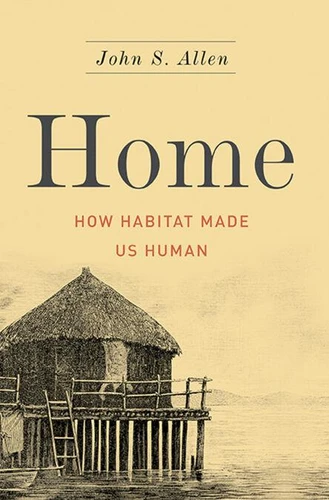
Home. How Habitat Made Us Human
Par :Formats :
Disponible dans votre compte client Decitre ou Furet du Nord dès validation de votre commande. Le format ePub protégé est :
- Compatible avec une lecture sur My Vivlio (smartphone, tablette, ordinateur)
- Compatible avec une lecture sur liseuses Vivlio
- Pour les liseuses autres que Vivlio, vous devez utiliser le logiciel Adobe Digital Edition. Non compatible avec la lecture sur les liseuses Kindle, Remarkable et Sony
- Non compatible avec un achat hors France métropolitaine
 , qui est-ce ?
Notre partenaire de plateforme de lecture numérique où vous retrouverez l'ensemble de vos ebooks gratuitement
Pour en savoir plus sur nos ebooks, consultez notre aide en ligne ici
C'est si simple ! Lisez votre ebook avec l'app Vivlio sur votre tablette, mobile ou ordinateur :

- Nombre de pages304
- FormatePub
- ISBN978-0-465-07389-4
- EAN9780465073894
- Date de parution28/12/2015
- Protection num.Adobe DRM
- Infos supplémentairesepub
- ÉditeurBasic Books
Résumé
A leading anthropologist studies the science behind "feeling at home" to show us how home made us human Home is where the heart is. Security, comfort, even love, are all feelings that are centered on the humble abode. But what if there is more to the feeling of being at home? Neuroanthropologist John S. Allen believes that the human habitat is one of the most important products of human cognitive, technological, and cultural evolution over the past two million years.
In Home, Allen argues that to "feel at home" is more than just an expression, but reflects a deep-seated cognitive basis for the human desire to have, use, and enjoy a place of one's own. Allen addresses the very basic question: How did a place to sleep become a home? Within human evolution, he ranks house and home as a signature development of our species, as it emerged alongside cooperative hunting, language, and other critical aspects of humanity.
Many animals burrow, making permanent home bases, but primates, generally speaking, do not: most wander, making nests at night wherever they might find themselves. This is often in home territory, but it isn't quite home. Our hominid ancestors were wanderers, too -- so how did we, over the past several million years, find our way home? To tell that story Allen will take us through evolutionary anthropology, neuroscience, the study of emotion, and modern sociology.
He examines the home from the inside (of our heads) out: homes are built with our brains as much as with our hands and tools. Allen argues that the thing that may have been most critical in our evolution is not the physical aspect of a home, but developing a feeling of defining, creating, and being in a home, whatever its physical form. The result was an environment, relatively secure against whatever horrors lurked outside, that enabled the expensive but creative human mind to reach its full flowering.
Today, with the threat of homelessness, child foster-care, and foreclosure, this idea of having a home is more powerful than ever. In a clear and accessible writing style, Allen sheds light on the deep, cognitive sources of the pleasures of having a home, the evolution of those behaviors, and why the deep reasons why they matter. Home is the story about how humans evolved to create a space not only for shelter, but also for nurturing creativity, innovation, and culture -- and why "feeling at home" is a fundamental aspect of the human condition.
In Home, Allen argues that to "feel at home" is more than just an expression, but reflects a deep-seated cognitive basis for the human desire to have, use, and enjoy a place of one's own. Allen addresses the very basic question: How did a place to sleep become a home? Within human evolution, he ranks house and home as a signature development of our species, as it emerged alongside cooperative hunting, language, and other critical aspects of humanity.
Many animals burrow, making permanent home bases, but primates, generally speaking, do not: most wander, making nests at night wherever they might find themselves. This is often in home territory, but it isn't quite home. Our hominid ancestors were wanderers, too -- so how did we, over the past several million years, find our way home? To tell that story Allen will take us through evolutionary anthropology, neuroscience, the study of emotion, and modern sociology.
He examines the home from the inside (of our heads) out: homes are built with our brains as much as with our hands and tools. Allen argues that the thing that may have been most critical in our evolution is not the physical aspect of a home, but developing a feeling of defining, creating, and being in a home, whatever its physical form. The result was an environment, relatively secure against whatever horrors lurked outside, that enabled the expensive but creative human mind to reach its full flowering.
Today, with the threat of homelessness, child foster-care, and foreclosure, this idea of having a home is more powerful than ever. In a clear and accessible writing style, Allen sheds light on the deep, cognitive sources of the pleasures of having a home, the evolution of those behaviors, and why the deep reasons why they matter. Home is the story about how humans evolved to create a space not only for shelter, but also for nurturing creativity, innovation, and culture -- and why "feeling at home" is a fundamental aspect of the human condition.