Originally published in 1992 and now available as an ebook.
This edition does not include any images.
WINNER OF THE 'LOS ANGELES TIMES' BOOK AWARD FOR HISTORY
Now that the great Soviet empire has finally unravelled, and with the future of the Commonwealth of Independent States looking precarious at best, and violent at worst, as long-subdued territorial conflicts flourish from Moldova to Siberia, never has it been so important to understand the vast continued bureaucracy that for seventy years held so many disparate peoples together.
How it did so, and the tactics it employed, form the spine of this acclaimed study of the world's last great land empire.
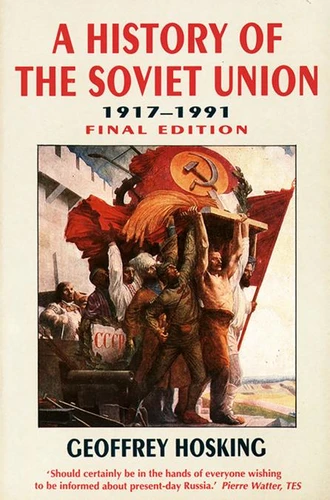
Geoffrey Hosking traces the evolution of the Soviet political system from its revolutionary origins in 1917 to the collapse instigated by the reforms of Gorbachev's 'perestroika'. He shows how power was rarely devolved outside a particularly tightly knit ruling elite, and focuses on the forms of contact that existed between rulers and ruled.
He places special emphasis on the experience of the peasantry, urban workers and the professional class, drawing on a mass of monographs and memoirs to show how they generated their own informal practices to adjust to changing Soviet social structures, and how, more often than is commonly realized in the West, they resisted repression and deprivation. This Final Edition obliges us to reflect on the enormity of the changes witnessed in the lands of the Soviet Union in the past five years.
By providing a vivid picture of what it has felt like to be a Soviet citizen during the prodigious upheavals of the twentieth century, it reminds us that we cannot afford to ignore the impact of this empire, globally and locally - an impact whose legacy will be with us well into the twenty-first century.
Originally published in 1992 and now available as an ebook.
This edition does not include any images.
WINNER OF THE 'LOS ANGELES TIMES' BOOK AWARD FOR HISTORY
Now that the great Soviet empire has finally unravelled, and with the future of the Commonwealth of Independent States looking precarious at best, and violent at worst, as long-subdued territorial conflicts flourish from Moldova to Siberia, never has it been so important to understand the vast continued bureaucracy that for seventy years held so many disparate peoples together.
How it did so, and the tactics it employed, form the spine of this acclaimed study of the world's last great land empire.
Geoffrey Hosking traces the evolution of the Soviet political system from its revolutionary origins in 1917 to the collapse instigated by the reforms of Gorbachev's 'perestroika'. He shows how power was rarely devolved outside a particularly tightly knit ruling elite, and focuses on the forms of contact that existed between rulers and ruled.
He places special emphasis on the experience of the peasantry, urban workers and the professional class, drawing on a mass of monographs and memoirs to show how they generated their own informal practices to adjust to changing Soviet social structures, and how, more often than is commonly realized in the West, they resisted repression and deprivation. This Final Edition obliges us to reflect on the enormity of the changes witnessed in the lands of the Soviet Union in the past five years.
By providing a vivid picture of what it has felt like to be a Soviet citizen during the prodigious upheavals of the twentieth century, it reminds us that we cannot afford to ignore the impact of this empire, globally and locally - an impact whose legacy will be with us well into the twenty-first century.

 , qui est-ce ?
