SOLDES
Jusqu'à -70% sur une sélection d'articles*


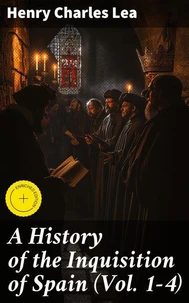
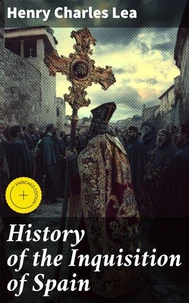
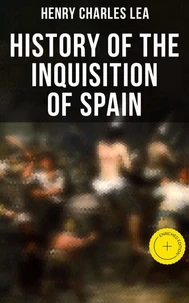
History of the Inquisition of Spain
Par :Formats :
Disponible dans votre compte client Decitre ou Furet du Nord dès validation de votre commande. Le format ePub est :
- Compatible avec une lecture sur My Vivlio (smartphone, tablette, ordinateur)
- Compatible avec une lecture sur liseuses Vivlio
- Pour les liseuses autres que Vivlio, vous devez utiliser le logiciel Adobe Digital Edition. Non compatible avec la lecture sur les liseuses Kindle, Remarkable et Sony
 , qui est-ce ?
Notre partenaire de plateforme de lecture numérique où vous retrouverez l'ensemble de vos ebooks gratuitement
Pour en savoir plus sur nos ebooks, consultez notre aide en ligne ici
C'est si simple ! Lisez votre ebook avec l'app Vivlio sur votre tablette, mobile ou ordinateur :

- Nombre de pages2447
- FormatePub
- ISBN859-65--4772289-2
- EAN8596547722892
- Date de parution15/11/2023
- Protection num.Digital Watermarking
- Taille3 Mo
- Infos supplémentairesepub
- ÉditeurDIGICAT
Résumé
Henry Charles Lea's "History of the Inquisition of Spain" serves as a meticulous exploration of one of history's most controversial institutions. Written in the late 19th century, the book employs rigorous research and a critical analytical style to elucidate the complexities of the Spanish Inquisition, highlighting its socio-political context and religious motivations. Lea's extensive use of primary sources, including official documents and contemporary accounts, enhances the work's academic authenticity, while his narrative is interspersed with thoughtful reflections on the cultural ramifications of such an oppressive regime.
Lea, an American historian and abolitionist, was profoundly influenced by the prevailing conflicts between enlightenment ideals and institutional authority. His commitment to social justice and advocacy for legal reform is evident in his writings, as he sought not only to document but also to critique the abuses of power endemic to the Inquisition. His scholarly background, particularly his interest in European history and religious intolerance, uniquely positioned him to tackle the intricacies of the Spanish Inquisition with both expertise and moral urgency.
This work is highly recommended for anyone interested in the intersection of history, religion, and human rights. Lea's detailed and engaging narrative provides crucial insights into the dark corners of institutionalized terror, making it essential reading for historians, students, and informed citizens alike.
Lea, an American historian and abolitionist, was profoundly influenced by the prevailing conflicts between enlightenment ideals and institutional authority. His commitment to social justice and advocacy for legal reform is evident in his writings, as he sought not only to document but also to critique the abuses of power endemic to the Inquisition. His scholarly background, particularly his interest in European history and religious intolerance, uniquely positioned him to tackle the intricacies of the Spanish Inquisition with both expertise and moral urgency.
This work is highly recommended for anyone interested in the intersection of history, religion, and human rights. Lea's detailed and engaging narrative provides crucial insights into the dark corners of institutionalized terror, making it essential reading for historians, students, and informed citizens alike.
A propos de Henry Charles Lea

1,99 €

2,99 €
1,99 €