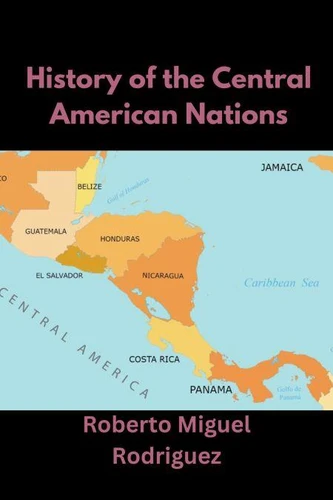
The history of the Central American nations is marked by a blend of indigenous cultures, European colonialism, independence struggles, and modern-day challenges. Central America is composed of seven nations-Guatemala, Belize, Honduras, El Salvador, Nicaragua, Costa Rica, and Panama-which share a common history of indigenous civilizations, colonial rule, and later independence. However, each nation has a distinct path shaped by its unique geography, resources, and people.
Before European arrival, Central America was home to advanced civilizations such as the Maya in the north (modern-day Guatemala, Belize, Honduras, and parts of Mexico) and the Nahua peoples in the south. The Maya built impressive cities, developed a sophisticated writing system, and created a complex calendar. These civilizations thrived for centuries before Spanish colonization. In the early 1500s, Spanish conquistadors, led by Hernán Cortés and other explorers, began to conquer the indigenous peoples of Central America.
The region was gradually incorporated into the Spanish Empire as part of the Viceroyalty of New Spain, with its indigenous populations subjected to forced labor and religious conversion. The Spanish introduced European crops, animals, and diseases, drastically altering the region's economy and demographics. By the early 1800s, revolutionary movements swept through Latin America, inspired by the independence struggles in Europe and North America.
Central America gained independence from Spain in 1821, initially joining the Mexican Empire under Agustín de Iturbide, before becoming part of the Federal Republic of Central America (1823-1838). However, the federation quickly dissolved due to internal conflicts, and the region splintered into separate nations. The newly independent nations faced political instability, with frequent changes in leadership, military coups, and foreign intervention.
Guatemala, Honduras, El Salvador, Nicaragua, and Costa Rica each struggled with internal strife, while Panama, formerly part of Colombia, became independent in 1903 with support from the United States, which sought control of the Panama Canal. Throughout the 20th century, many of the Central American nations experienced cycles of authoritarian regimes, military dictatorships, and civil wars. For example, El Salvador, Nicaragua, and Guatemala endured brutal civil conflicts during the Cold War, often with U.
S. involvement either supporting governments or opposing leftist insurgencies.
The history of the Central American nations is marked by a blend of indigenous cultures, European colonialism, independence struggles, and modern-day challenges. Central America is composed of seven nations-Guatemala, Belize, Honduras, El Salvador, Nicaragua, Costa Rica, and Panama-which share a common history of indigenous civilizations, colonial rule, and later independence. However, each nation has a distinct path shaped by its unique geography, resources, and people.
Before European arrival, Central America was home to advanced civilizations such as the Maya in the north (modern-day Guatemala, Belize, Honduras, and parts of Mexico) and the Nahua peoples in the south. The Maya built impressive cities, developed a sophisticated writing system, and created a complex calendar. These civilizations thrived for centuries before Spanish colonization. In the early 1500s, Spanish conquistadors, led by Hernán Cortés and other explorers, began to conquer the indigenous peoples of Central America.
The region was gradually incorporated into the Spanish Empire as part of the Viceroyalty of New Spain, with its indigenous populations subjected to forced labor and religious conversion. The Spanish introduced European crops, animals, and diseases, drastically altering the region's economy and demographics. By the early 1800s, revolutionary movements swept through Latin America, inspired by the independence struggles in Europe and North America.
Central America gained independence from Spain in 1821, initially joining the Mexican Empire under Agustín de Iturbide, before becoming part of the Federal Republic of Central America (1823-1838). However, the federation quickly dissolved due to internal conflicts, and the region splintered into separate nations. The newly independent nations faced political instability, with frequent changes in leadership, military coups, and foreign intervention.
Guatemala, Honduras, El Salvador, Nicaragua, and Costa Rica each struggled with internal strife, while Panama, formerly part of Colombia, became independent in 1903 with support from the United States, which sought control of the Panama Canal. Throughout the 20th century, many of the Central American nations experienced cycles of authoritarian regimes, military dictatorships, and civil wars. For example, El Salvador, Nicaragua, and Guatemala endured brutal civil conflicts during the Cold War, often with U.
S. involvement either supporting governments or opposing leftist insurgencies.


 , qui est-ce ?