SOLDES
Jusqu'à -70% sur une sélection d'articles*

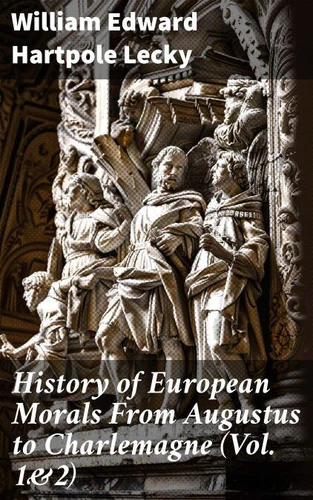
History of European Morals From Augustus to Charlemagne (Vol. 1&2). Complete Edition
Par :Formats :
Disponible dans votre compte client Decitre ou Furet du Nord dès validation de votre commande. Le format ePub est :
- Compatible avec une lecture sur My Vivlio (smartphone, tablette, ordinateur)
- Compatible avec une lecture sur liseuses Vivlio
- Pour les liseuses autres que Vivlio, vous devez utiliser le logiciel Adobe Digital Edition. Non compatible avec la lecture sur les liseuses Kindle, Remarkable et Sony
 , qui est-ce ?
Notre partenaire de plateforme de lecture numérique où vous retrouverez l'ensemble de vos ebooks gratuitement
Pour en savoir plus sur nos ebooks, consultez notre aide en ligne ici
C'est si simple ! Lisez votre ebook avec l'app Vivlio sur votre tablette, mobile ou ordinateur :

- Nombre de pages812
- FormatePub
- ISBN859-65--4778200-1
- EAN8596547782001
- Date de parution18/12/2023
- Protection num.Digital Watermarking
- Taille1 Mo
- Infos supplémentairesepub
- ÉditeurGOOD PRESS
Résumé
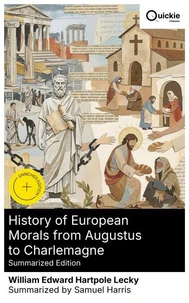
William Edward Hartpole Lecky's "History of European Morals From Augustus to Charlemagne" delves into the evolution of moral thought and ethical practice in Europe from the Roman Empire to the early Middle Ages. The work is characterized by Lecky'Äôs rigorous analytical style and comprehensive scope, intertwining historical narrative with cultural critique, illustrating how societal norms shaped and were shaped by political, religious, and social forces.
Lecky's extensive research draws upon primary sources and contemporaneous literature, situating the reader within the intricacies of moral philosophy and its ramifications during this transformative period in history. Lecky (1838-1903), an Irish historian and philosopher, was deeply influenced by the intellectual currents of his time, including Utilitarianism and the rising interest in sociology. His background as a liberal thinker and his commitment to rationality and empiricism drove him to examine morality as a historical construct.
His scholarly pursuits were marked by a desire to understand how historical contexts inform ethical behavior, evident in his meticulous approach to dissecting historical moral frameworks. For readers interested in the genesis of modern moral thought, Lecky'Äôs work is essential. It not only provides a sweeping overview of historical moral developments but also invites reflections on contemporary ethical issues, making it an invaluable resource for historians, philosophers, and anyone intrigued by the interplay between history and morality.
Lecky's extensive research draws upon primary sources and contemporaneous literature, situating the reader within the intricacies of moral philosophy and its ramifications during this transformative period in history. Lecky (1838-1903), an Irish historian and philosopher, was deeply influenced by the intellectual currents of his time, including Utilitarianism and the rising interest in sociology. His background as a liberal thinker and his commitment to rationality and empiricism drove him to examine morality as a historical construct.
His scholarly pursuits were marked by a desire to understand how historical contexts inform ethical behavior, evident in his meticulous approach to dissecting historical moral frameworks. For readers interested in the genesis of modern moral thought, Lecky'Äôs work is essential. It not only provides a sweeping overview of historical moral developments but also invites reflections on contemporary ethical issues, making it an invaluable resource for historians, philosophers, and anyone intrigued by the interplay between history and morality.