SOLDES
Jusqu'à -70% sur une sélection d'articles*

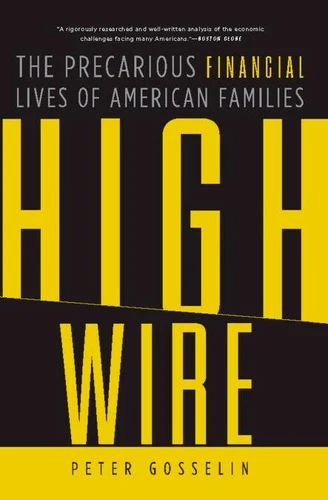
High Wire. The Precarious Financial Lives of American Families
Par :Formats :
Disponible dans votre compte client Decitre ou Furet du Nord dès validation de votre commande. Le format ePub protégé est :
- Compatible avec une lecture sur My Vivlio (smartphone, tablette, ordinateur)
- Compatible avec une lecture sur liseuses Vivlio
- Pour les liseuses autres que Vivlio, vous devez utiliser le logiciel Adobe Digital Edition. Non compatible avec la lecture sur les liseuses Kindle, Remarkable et Sony
- Non compatible avec un achat hors France métropolitaine
 , qui est-ce ?
Notre partenaire de plateforme de lecture numérique où vous retrouverez l'ensemble de vos ebooks gratuitement
Pour en savoir plus sur nos ebooks, consultez notre aide en ligne ici
C'est si simple ! Lisez votre ebook avec l'app Vivlio sur votre tablette, mobile ou ordinateur :

- Nombre de pages272
- FormatePub
- ISBN978-0-7867-4449-7
- EAN9780786744497
- Date de parution08/06/2009
- Protection num.Adobe DRM
- Infos supplémentairesepub
- ÉditeurBasic Books
Résumé
The U. S. economy is wrapping up twenty-five years of some of the strongest, smoothest growth in its history-a performance so sweet economists have given it a name: "the Great Moderation." So why have so many of us, even those making hundreds of thousands of dollars, arrived at the new century with a gnawing sense that events are moving against our families and ourselves? The easy answer is that we're suffering a case of needless anxiety.
But the easy answer is wrong. Drawing on interviews with hundreds of Americans and new statistics he developed, Peter Gosselin traces a quarter-century shift of economic risk from the broad shoulders of business and government to the backs of working people. It is a shift that has shaken the pillars of most families' lives-stable jobs, solid benefits, government protections. The change doesn't mean one can't prosper.
But it does mean the benefits of growth come at greater peril and your financial fall will be steeper if you stumble. This threat to working Americans' security-and what to do about it-is a pressing concern to economists, policy-makers, and everyone who works for a living.
But the easy answer is wrong. Drawing on interviews with hundreds of Americans and new statistics he developed, Peter Gosselin traces a quarter-century shift of economic risk from the broad shoulders of business and government to the backs of working people. It is a shift that has shaken the pillars of most families' lives-stable jobs, solid benefits, government protections. The change doesn't mean one can't prosper.
But it does mean the benefits of growth come at greater peril and your financial fall will be steeper if you stumble. This threat to working Americans' security-and what to do about it-is a pressing concern to economists, policy-makers, and everyone who works for a living.