SOLDES
Jusqu'à -70% sur une sélection d'articles*

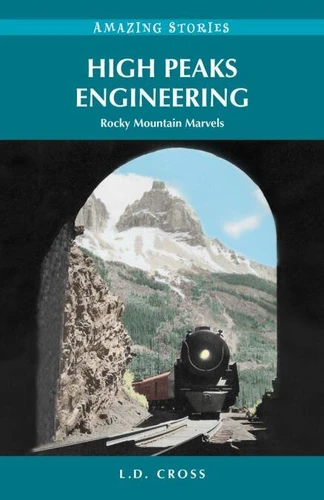
High Peaks Engineering. Rocky Mountain Marvels
Par :Formats :
Disponible dans votre compte client Decitre ou Furet du Nord dès validation de votre commande. Le format ePub est :
- Compatible avec une lecture sur My Vivlio (smartphone, tablette, ordinateur)
- Compatible avec une lecture sur liseuses Vivlio
- Pour les liseuses autres que Vivlio, vous devez utiliser le logiciel Adobe Digital Edition. Non compatible avec la lecture sur les liseuses Kindle, Remarkable et Sony
 , qui est-ce ?
Notre partenaire de plateforme de lecture numérique où vous retrouverez l'ensemble de vos ebooks gratuitement
Pour en savoir plus sur nos ebooks, consultez notre aide en ligne ici
C'est si simple ! Lisez votre ebook avec l'app Vivlio sur votre tablette, mobile ou ordinateur :

- Nombre de pages144
- FormatePub
- ISBN978-1-927527-81-8
- EAN9781927527818
- Date de parution07/07/2014
- Protection num.Digital Watermarking
- Taille2 Mo
- Infos supplémentairesepub
- ÉditeurHeritage House
Résumé
Building transportation routes through the Rockies is dangerous. It always has been. It is also expensive, labour-intensive, and highly political. But railway and highway construction through the western cordillera succeeded thanks to scientific innovation and sheer human grit. In the nineteenth century, steam locomotives, railways, tunnels, trestles, and telegraphy represented the hi-tech advances of the day.
A vast country with a small population raised money (and more and more money) and overcame mountain summits, foul weather, and scandal to build the longest railway of its time that would unify the young nation of Canada from east to west. To offset operating costs and increase passenger traffic, the three architectural wonders of the Banff, Jasper, and Lake Louise Resorts were created amid snowy heights, glaciers, and the headwaters of four river systems-Athabasca, Columbia, Fraser, and the North Saskatchewan.
Natural marvels like Cave and Basin, Radium, Miette, and other mineral hot springs were also developed. In the twentieth century, the construction of the Trans-Canada Highway accelerated the appeal of the peaks. Today, oil and gas pipelines are pushing new routes through the Rocky Mountains. The physical challenges are similar to earlier eras, but high peaks engineering must also address the ecological impacts of pipeline corridors moving oil and gas through Rocky Mountain passages.
It will be another test of Canadian resourcefulness.
A vast country with a small population raised money (and more and more money) and overcame mountain summits, foul weather, and scandal to build the longest railway of its time that would unify the young nation of Canada from east to west. To offset operating costs and increase passenger traffic, the three architectural wonders of the Banff, Jasper, and Lake Louise Resorts were created amid snowy heights, glaciers, and the headwaters of four river systems-Athabasca, Columbia, Fraser, and the North Saskatchewan.
Natural marvels like Cave and Basin, Radium, Miette, and other mineral hot springs were also developed. In the twentieth century, the construction of the Trans-Canada Highway accelerated the appeal of the peaks. Today, oil and gas pipelines are pushing new routes through the Rocky Mountains. The physical challenges are similar to earlier eras, but high peaks engineering must also address the ecological impacts of pipeline corridors moving oil and gas through Rocky Mountain passages.
It will be another test of Canadian resourcefulness.
A propos de L.D. Cross

5,49 €