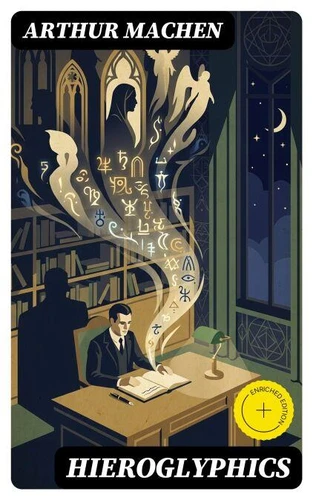
Arthur Machen's *Hieroglyphics: A Note upon Ecstasy in Literature* is an eccentric, intellectually provocative work of literary criticism that argues for "ecstasy"-the apprehension of spiritual mystery, wonder, and heightened being-as the defining quality of great literature. Rejecting narrowly realistic and merely didactic writing, Machen proposes that literary language should disclose realities concealed beneath ordinary appearances.
His argument moves associatively through examples from English letters, combining aesthetic theory, theological speculation, satire, and personal credo. The book belongs to the late-Victorian and fin-de-siècle tradition of symbolist and mystical criticism, while anticipating modern discussions of imaginative perception and the limits of realism. Machen (1863-1947), a Welsh-born author associated with decadence, occult fiction, and Christian mysticism, developed these ideas through a career devoted to the supernatural possibilities of art.
His fiction-especially *The Great God Pan* and *The Hill of Dreams*-transforms landscape, sensation, and transgression into encounters with hidden worlds. *Hieroglyphics* gives theoretical expression to that artistic practice, emerging from his resistance to utilitarian culture and to criticism that measured literature chiefly by moral or social usefulness. This book will reward readers interested in literary theory, mysticism, symbolism, and the intellectual history of the fin de siècle.
Its dense, combative, and sometimes idiosyncratic prose is best approached not as a systematic aesthetic treatise but as a passionate defense of literature's capacity to enlarge consciousness. Scholars of Machen, decadence, religious imagination, and early modern literary criticism will find it an indispensable key to his imaginative universe.
This enriched edition has been carefully crafted to add value to your reading experience.
- A succinct Introduction situates the work's timeless appeal and themes.
- The Synopsis outlines the central plot, highlighting key developments without spoiling critical twists.
- A detailed Historical Context immerses you in the era's events and influences that shaped the writing.
- A thorough Analysis dissects symbols, motifs, and character arcs to unearth underlying meanings.
- Reflection questions prompt you to engage personally with the work's messages, connecting them to modern life.
- Hand-picked Memorable Quotes shine a spotlight on moments of literary brilliance.
- Interactive footnotes clarify unusual references, historical allusions, and archaic phrases for an effortless, more informed read.
Arthur Machen's *Hieroglyphics: A Note upon Ecstasy in Literature* is an eccentric, intellectually provocative work of literary criticism that argues for "ecstasy"-the apprehension of spiritual mystery, wonder, and heightened being-as the defining quality of great literature. Rejecting narrowly realistic and merely didactic writing, Machen proposes that literary language should disclose realities concealed beneath ordinary appearances.
His argument moves associatively through examples from English letters, combining aesthetic theory, theological speculation, satire, and personal credo. The book belongs to the late-Victorian and fin-de-siècle tradition of symbolist and mystical criticism, while anticipating modern discussions of imaginative perception and the limits of realism. Machen (1863-1947), a Welsh-born author associated with decadence, occult fiction, and Christian mysticism, developed these ideas through a career devoted to the supernatural possibilities of art.
His fiction-especially *The Great God Pan* and *The Hill of Dreams*-transforms landscape, sensation, and transgression into encounters with hidden worlds. *Hieroglyphics* gives theoretical expression to that artistic practice, emerging from his resistance to utilitarian culture and to criticism that measured literature chiefly by moral or social usefulness. This book will reward readers interested in literary theory, mysticism, symbolism, and the intellectual history of the fin de siècle.
Its dense, combative, and sometimes idiosyncratic prose is best approached not as a systematic aesthetic treatise but as a passionate defense of literature's capacity to enlarge consciousness. Scholars of Machen, decadence, religious imagination, and early modern literary criticism will find it an indispensable key to his imaginative universe.
This enriched edition has been carefully crafted to add value to your reading experience.
- A succinct Introduction situates the work's timeless appeal and themes.
- The Synopsis outlines the central plot, highlighting key developments without spoiling critical twists.
- A detailed Historical Context immerses you in the era's events and influences that shaped the writing.
- A thorough Analysis dissects symbols, motifs, and character arcs to unearth underlying meanings.
- Reflection questions prompt you to engage personally with the work's messages, connecting them to modern life.
- Hand-picked Memorable Quotes shine a spotlight on moments of literary brilliance.
- Interactive footnotes clarify unusual references, historical allusions, and archaic phrases for an effortless, more informed read.

 , qui est-ce ?