SOLDES
Jusqu'à -70% sur une sélection d'articles*

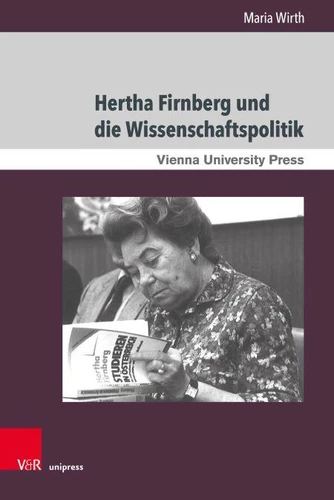
Hertha Firnberg und die Wissenschaftspolitik. Eine biografische Annäherung
Par :Formats :
Disponible dans votre compte client Decitre ou Furet du Nord dès validation de votre commande. Le format PDF est :
- Compatible avec une lecture sur My Vivlio (smartphone, tablette, ordinateur)
- Compatible avec une lecture sur liseuses Vivlio
- Pour les liseuses autres que Vivlio, vous devez utiliser le logiciel Adobe Digital Edition. Non compatible avec la lecture sur les liseuses Kindle, Remarkable et Sony
 , qui est-ce ?
Notre partenaire de plateforme de lecture numérique où vous retrouverez l'ensemble de vos ebooks gratuitement
Pour en savoir plus sur nos ebooks, consultez notre aide en ligne ici
C'est si simple ! Lisez votre ebook avec l'app Vivlio sur votre tablette, mobile ou ordinateur :

- Nombre de pages241
- FormatPDF
- ISBN978-3-8470-1621-2
- EAN9783847016212
- Date de parution04/09/2023
- Protection num.pas de protection
- Taille8 Mo
- Infos supplémentairespdf
- ÉditeurV&R Unipress
Résumé
Hertha Firnberg (1909-1994) war die zweite Frau, die in Österreich je einem Ministerium vorstand sowie jene Politikerin, die 1970 ein eigenständiges Wissenschaftsressort aufbaute und dieses 13 Jahre lang, während der gesamten Ära Kreisky, leitete. Maria Wirth rückt in ihrer Studie Hertha Firnberg als zentrale Akteurin in der österreichischen Wissenschaftspolitik in den Mittelpunkt. Sie beleuchtet die Biografie Firnbergs und ihre Tätigkeit als Wissenschaftspolitikerin mit einem Fokus auf die Universitäts- und Forschungspolitik sowie auf die Situation von Mädchen und Frauen im Bildungssystem und verortet beides im zeitgeschichtlichen Kontext.
Der Bildungs-, Universitäts- und Forschungspolitik im 20. Jahrhundert kommt dabei - sowohl im Hinblick auf Firnbergs Leben als auch darüber hinaus - eine große Beachtung zu. Hertha Firnberg (1909-1994) was the second female minister in Austria and the politician who established an independent Ministry of Science in 1970, which she headed throughout the whole Kreisky era until 1983. Maria Wirth's study focuses on Hertha Firnberg as a central player in Austrian science policy.
She illuminates Firnberg's biography and her activities as a science politician with a focus on university and research policy as well as the situation of girls and women in the educational system and situates both in the context of contemporary history. Educational, university, and research policies in the 20th century are given a great deal of attention, both in terms of Firnberg's life and beyond her biography.
Der Bildungs-, Universitäts- und Forschungspolitik im 20. Jahrhundert kommt dabei - sowohl im Hinblick auf Firnbergs Leben als auch darüber hinaus - eine große Beachtung zu. Hertha Firnberg (1909-1994) was the second female minister in Austria and the politician who established an independent Ministry of Science in 1970, which she headed throughout the whole Kreisky era until 1983. Maria Wirth's study focuses on Hertha Firnberg as a central player in Austrian science policy.
She illuminates Firnberg's biography and her activities as a science politician with a focus on university and research policy as well as the situation of girls and women in the educational system and situates both in the context of contemporary history. Educational, university, and research policies in the 20th century are given a great deal of attention, both in terms of Firnberg's life and beyond her biography.