SOLDES
Jusqu'à -70% sur une sélection d'articles*

Nouveauté
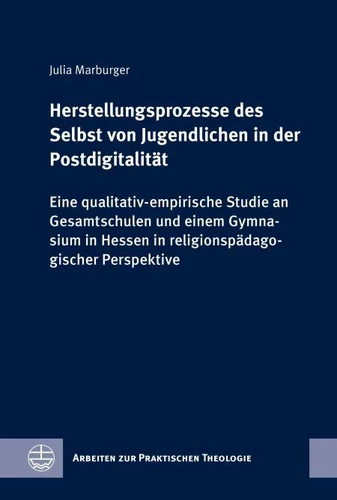
Herstellungsprozesse des Selbst von Jugendlichen in der Postdigitalität. Eine qualitativ-empirische Studie an Gesamtschulen und einem Gymnasium in Hessen in religionspädagogischer Perspektive
Par :Formats :
Disponible dans votre compte client Decitre ou Furet du Nord dès validation de votre commande. Le format PDF est :
- Compatible avec une lecture sur My Vivlio (smartphone, tablette, ordinateur)
- Compatible avec une lecture sur liseuses Vivlio
- Pour les liseuses autres que Vivlio, vous devez utiliser le logiciel Adobe Digital Edition. Non compatible avec la lecture sur les liseuses Kindle, Remarkable et Sony
 , qui est-ce ?
Notre partenaire de plateforme de lecture numérique où vous retrouverez l'ensemble de vos ebooks gratuitement
Pour en savoir plus sur nos ebooks, consultez notre aide en ligne ici
C'est si simple ! Lisez votre ebook avec l'app Vivlio sur votre tablette, mobile ou ordinateur :

- Nombre de pages368
- FormatPDF
- ISBN978-3-374-08067-0
- EAN9783374080670
- Date de parution26/06/2026
- Protection num.Digital Watermarking
- Taille5 Mo
- Infos supplémentairespdf
- ÉditeurEvangelische Verlagsanstalt
Résumé
Diese Dissertation nimmt - ausgehend von den Beschlüssen der Kultusministerkonferenz zur Bildung in der digitalen Welt - die Frage in den Blick, was digitale Souveränität im Kontext jugendlicher Lebenswelten bedeutet. Grundlage ist ein qualitativ-empirisches Forschungsdesign, in dessen Rahmen Gruppendiskussionen an Gesamtschulen in Hessen sowie an einem Gymnasium durchgeführt wurden. Die Auswertung erfolgte mit Hilfe der Dokumentarischen Methode.
Im Zentrum steht die Analyse der Herstellungsprozesse des Selbst von Jugendlichen in einer postdigitalen Welt: Welche Alltagserfahrungen prägen Jugendliche? Wie beschreiben sie sich selbst? Und welche Bedeutung kommt diesen Erfahrungen für die Herausbildung selbstbestimmten und digital-souveränen Handelns zu? Die Ergebnisse der Untersuchung eröffnen neue Perspektiven für die Religionspädagogik.
In dem Maße, wie Digitalisierung zum Querschnittsthema religiöser Bildungsprozesse wird, stellt sich die Frage nach der religionspädagogischen Verantwortung neu. Die Studie plädiert für eine techniksensibel-informierte Religionspädagogik in postdigitalen Zeiten. [Self-Concepts of digital natives in a digitalized world. An empirical view in postdigital age] Based on the resolutions of the Conference of Ministers of Education »Bildung in der digitalen Welt« , this dissertation examines the question of what digital sovereignty means in the context of young people's lives.
It is based on a qualitative empirical research design, which involved group discussions at comprehensive schools in Hessen. The evaluation was carried out using the documentary method. The focus is on analyzing the processes of self-construction among young people in a post-digital world: What everyday experiences shape young people? How do they describe themselves? What significance do these experiences have for the development of self-determined and digitally sovereign behavior? The results of this research open up new avenues for religious education.
In post-digital times, there is a need for technology-sensitive and informed religious education.
In dem Maße, wie Digitalisierung zum Querschnittsthema religiöser Bildungsprozesse wird, stellt sich die Frage nach der religionspädagogischen Verantwortung neu. Die Studie plädiert für eine techniksensibel-informierte Religionspädagogik in postdigitalen Zeiten. [Self-Concepts of digital natives in a digitalized world. An empirical view in postdigital age] Based on the resolutions of the Conference of Ministers of Education »Bildung in der digitalen Welt« , this dissertation examines the question of what digital sovereignty means in the context of young people's lives.
It is based on a qualitative empirical research design, which involved group discussions at comprehensive schools in Hessen. The evaluation was carried out using the documentary method. The focus is on analyzing the processes of self-construction among young people in a post-digital world: What everyday experiences shape young people? How do they describe themselves? What significance do these experiences have for the development of self-determined and digitally sovereign behavior? The results of this research open up new avenues for religious education.
In post-digital times, there is a need for technology-sensitive and informed religious education.